
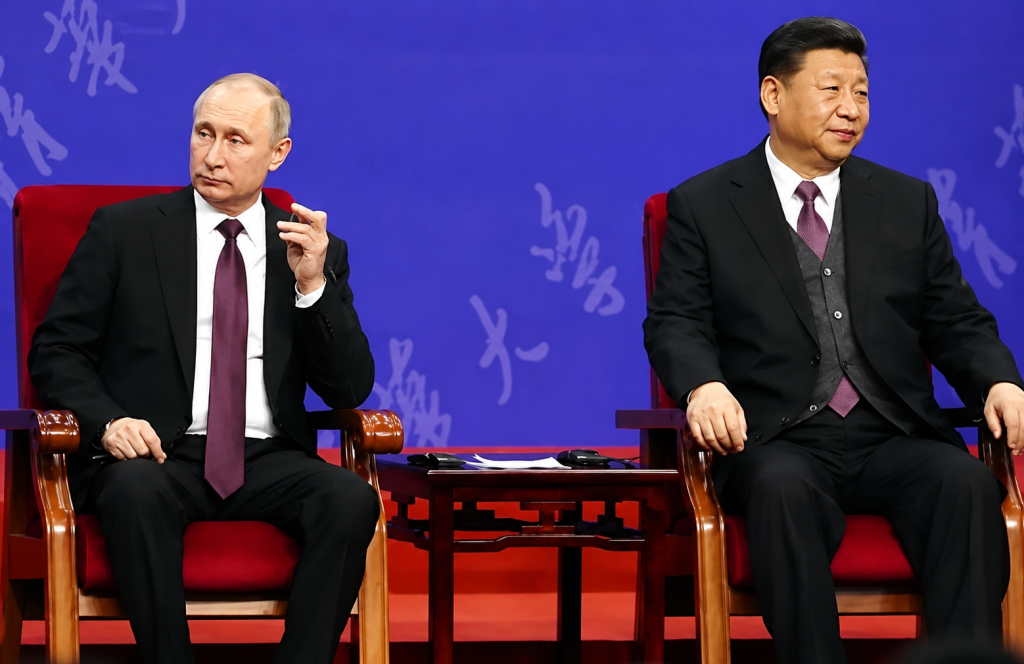
By hosting several international leaders in Beijing, including Russian President Vladimir Putin, Chinese President Xi Jinping continues to position China at the center of global geopolitical affairs. However, behind the public displays of friendship between Beijing and Moscow, one major issue remains unresolved: the massive “Power of Siberia 2” gas pipeline project, a strategic initiative that Russia has been eagerly awaiting for years.
During this official visit marking the 25th anniversary of the Sino-Russian friendship treaty, Vladimir Putin hoped to secure a firm commitment from Beijing regarding the pipeline, which is designed to transport Russian gas to China through Mongolia. The project, spanning more than 2,600 kilometers, would be capable of delivering up to 50 billion cubic meters of gas annually — a crucial volume for Moscow as it continues to lose access to European markets due to sanctions linked to the war in Ukraine.
Despite warm statements exchanged between the two leaders, no final agreement was signed. Beijing continues to delay its approval, taking advantage of Russia’s growing dependence to negotiate more favorable pricing conditions while maintaining its own strategic flexibility. China is also seeking to avoid becoming overly dependent on Russian gas as it simultaneously accelerates investments in renewable energy, nuclear power, and diversified energy imports.
The situation highlights the increasingly unequal nature of the Sino-Russian partnership. Since the beginning of the war in Ukraine, Russia has moved significantly closer to China economically and diplomatically, while Beijing has adopted a more cautious and calculated approach, using its economic influence as leverage during negotiations. Several analysts now believe that Moscow appears more dependent on Beijing than an equal strategic partner.
Beyond energy issues, the two leaders nevertheless reaffirmed their shared opposition to Western influence, particularly that of the United States. They signed several cooperation agreements and released a joint statement criticizing Western “hegemonism” while calling for a more multipolar world order. Rising tensions in the Middle East, especially surrounding Iran and the Strait of Hormuz, were also central topics during the discussions because of their direct impact on global energy markets.
For Beijing, the summit further strengthens China’s image as an essential diplomatic power capable of engaging with all major international actors. For Moscow, however, the lack of concrete progress on the “Power of Siberia 2” project serves as another reminder that Russia currently finds itself in a weaker position relative to its powerful Chinese neighbor.