
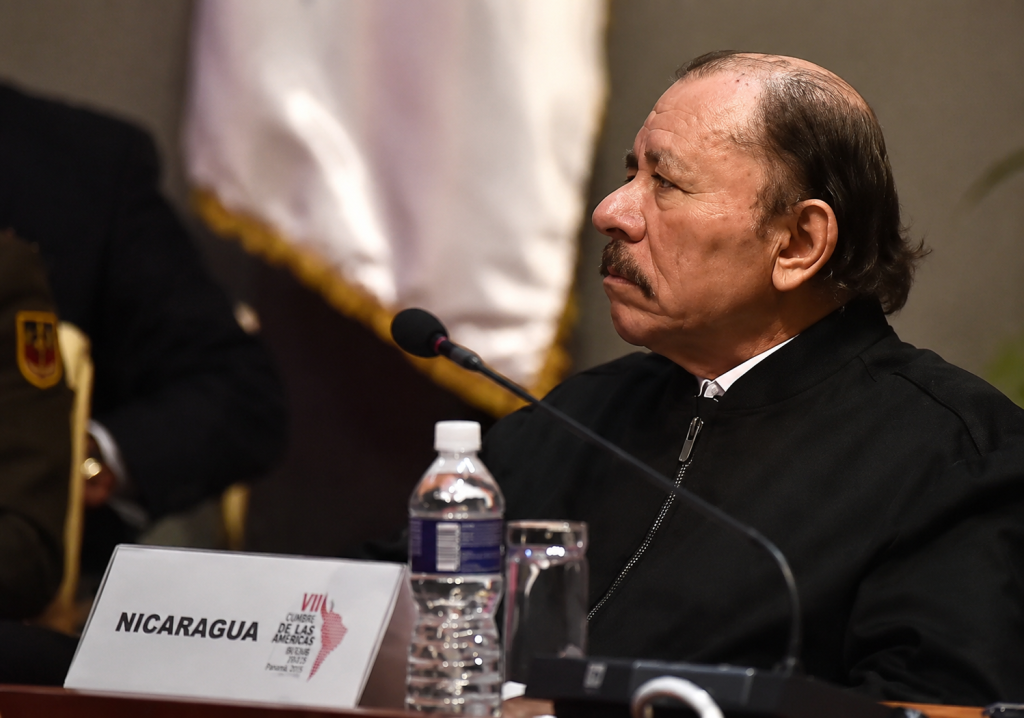
The Nicaraguan government is moving forward with another major institutional reform that has sparked strong international concern. Proposed by President Daniel Ortega and Co-President Rosario Murillo, the new electoral reform would extend the presidential term from six to seven years while broadening the grounds for disqualifying candidates from future elections. The initiative is widely seen as another step in consolidating the ruling couple’s grip on power, amid ongoing criticism over the country’s democratic backsliding.
According to the draft legislation submitted to the National Assembly, which is overwhelmingly controlled by the ruling Sandinista National Liberation Front (FSLN), future presidential elections would be held every seven years instead of every six. The proposal comes less than two years after a constitutional reform that took effect in 2025. That reform had already extended the presidential term from five to six years, established the co-presidency jointly held by Daniel Ortega and Rosario Murillo, and significantly expanded the powers of the executive branch.
The proposed electoral reform would also tighten eligibility requirements for candidates. Individuals accused of undermining the country’s “independence,” “sovereignty,” or “supreme national interests” could be barred from running for office. In practice, these provisions are expected to affect opposition politicians, journalists, activists, and other government critics, many of whom have already faced imprisonment, exile, or the loss of their Nicaraguan nationality in recent years. Human rights organizations argue that the broad wording of these provisions could provide the government with an additional legal mechanism to eliminate political competition.
Since the anti-government protests of 2018, which were violently suppressed according to the United Nations and several international human rights organizations, the Nicaraguan government has steadily dismantled democratic checks and balances. Hundreds of non-governmental organizations have been dissolved, numerous independent media outlets have either closed or relocated abroad, and many opposition figures have been jailed, forced into exile, or stripped of their citizenship. The 2021 presidential election was also widely criticized after several leading opposition candidates were arrested before the vote, allowing Ortega to secure another term without meaningful competition.
The latest proposal follows recent statements by Daniel Ortega declaring that Nicaragua would no longer hold elections under the traditional model, arguing that such elections had become instruments of foreign interference and attempts to destabilize the country. His remarks triggered widespread international criticism, with several Western governments and international organizations warning that Nicaragua is continuing to move away from democratic governance.
The United States has called for an extraordinary meeting of the Organization of American States (OAS) to discuss the country’s political situation, arguing that the proposed reforms further undermine political freedoms and democratic institutions. Several Latin American governments and international human rights organizations have also expressed concern over the continued erosion of the rule of law and political pluralism in Nicaragua.
Political analysts believe the reform is part of a broader strategy by Ortega and Murillo to secure their long-term hold on power. By extending presidential terms and further restricting opposition participation, the government would reduce the frequency of elections while strengthening executive control over the country’s institutions. According to many experts, these measures move Nicaragua even closer to a political system where elections no longer provide genuine democratic competition, but instead serve to reinforce the dominance of the ruling leadership.
The bill must still complete the legislative process before becoming law. However, its approval is considered highly likely given the overwhelming majority held by the ruling party in the National Assembly. If enacted, the reform would mark another significant milestone in Nicaragua’s ongoing political transformation and is expected to intensify international criticism over the country’s weakening democracy, diminishing separation of powers, and shrinking political freedoms.