
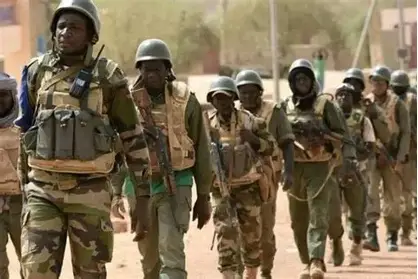
Mali has entered a new critical phase of its security crisis after the strategic northern city of Kidal was seized by an alliance of Tuareg rebels and jihadist groups. According to several converging reports, the city has fallen under the control of the Front for the Liberation of Azawad (FLA) and the Group for the Support of Islam and Muslims (JNIM), an organization linked to Al-Qaeda. This development represents a major military and political setback for the transitional authorities led by General Assimi Goïta.
Kidal holds deep symbolic importance in Mali’s modern history. Long considered a stronghold of Tuareg rebellions, the city had been recaptured by the Malian army in 2023 with the support of Russian forces associated with the Wagner Group, now reorganized as Africa Corps. Losing it now significantly weakens the junta’s narrative of restoring state authority. The recapture of Kidal had been presented as a historic victory, but its loss now completely reverses that momentum.
The offensive has not been limited to the north of the country. Coordinated attacks have also targeted several sensitive areas, including Bamako, Kati, Gao, Mopti, and Sévaré. Kati, home to one of the country’s main military bases, was among the key targets. The geographic scale and simultaneous nature of these operations reveal a level of planning rarely seen since the beginning of Mali’s crisis in 2012. Many analysts view this as evidence of growing strength among armed groups despite Russian support for the Malian military.
One of the most striking aspects of this latest escalation is the open cooperation between Tuareg separatist movements and jihadist organizations. Historically, relations between these groups have shifted between rivalry and tactical coordination. Their current partnership significantly changes the balance of the conflict, combining local roots, military mobility, and the capacity to destabilize the country on a national scale. While this alliance may remain fragile ideologically, its operational effectiveness is already raising serious concerns among regional observers.
For Mali’s military rulers, the crisis comes at a particularly delicate moment. The regime has severed ties with several Western partners, demanded the withdrawal of the United Nations mission MINUSMA, and relied heavily on a security-first strategy. Yet despite these choices, insecurity continues to spread, supply routes remain vulnerable, and large rural areas still escape state control. The loss of Kidal could revive domestic criticism regarding the country’s military governance and the real effectiveness of its foreign alliances.
Beyond Mali, the situation may have consequences for the entire Sahel region. Mali is part of the Alliance of Sahel States alongside Burkina Faso and Niger, two neighboring countries also ruled by military governments facing jihadist threats. A prolonged destabilization of Mali could therefore intensify regional insecurity, disrupt cross-border trade, and trigger new waves of civilian displacement.
The situation remains fluid, and fighting may continue around positions still held by Malian forces. However, one thing is already clear: the fall of Kidal to rebel forces is one of the most significant events in Mali’s conflict in recent years and could reshape the balance of power in the north of the country for a long time.