
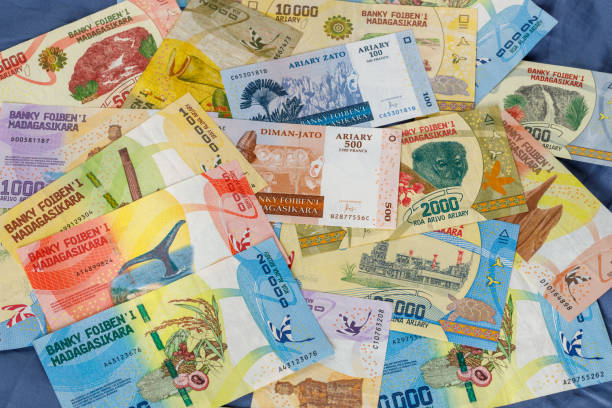
At first glance, the appreciation of the national currency could be seen as a positive signal for Madagascar’s economy, reflecting a degree of macroeconomic stability. However, on the ground, economic operators are raising serious concerns: an overly strong ariary has become a major obstacle to the competitiveness of Malagasy products on international markets, putting key export sectors under pressure.
According to foreign trade professionals, the recent appreciation estimated at around 700 ariary since the beginning of the year has already had tangible consequences. Exporters, who sell their goods in foreign currencies, are seeing their revenues shrink once converted into ariary, significantly compressing their margins. In flagship sectors such as vanilla and cloves, losses are estimated at around 8%, which roughly corresponds to operators’ net profit margins.
Beyond immediate profitability, the country’s overall competitiveness is being called into question. A stronger ariary makes Malagasy products more expensive on global markets, reducing their attractiveness compared to those from competing countries. As a result, international buyers may gradually shift toward alternative suppliers offering more competitive pricing, risking the marginalization of certain national industries.
The impact extends far beyond exporting companies. The entire value chain is affected. Reduced revenues lead to lower purchase prices paid to producers, worsening economic conditions in rural areas. This domino effect also weakens companies’ investment capacities, slowing down the modernization of agricultural and industrial infrastructure—an essential factor for improving productivity and product quality.
The employment sector is already experiencing the first shocks. More than 10,000 jobs have reportedly been suspended within export processing zone companies and their partners, according to industry representatives. Some businesses are even operating at a loss, highlighting the severity of the current situation.
In response to these challenges, economic stakeholders are calling for a more balanced management of the exchange rate. They believe the value of the ariary should be more closely aligned with market mechanisms, particularly through the interbank foreign exchange market, in order to avoid excessive fluctuations whether appreciation or depreciation. Monetary stability is therefore seen as a key lever to preserve export competitiveness while supporting local production.
In this context, strengthening dialogue between public authorities and the private sector is considered essential. The issue goes far beyond exchange rate policy: it is about safeguarding one of the pillars of Madagascar’s economy. With agricultural and industrial exports representing a significant share of national income and employment, failure to act promptly could turn the apparent strength of the ariary into a long-term source of economic vulnerability.