
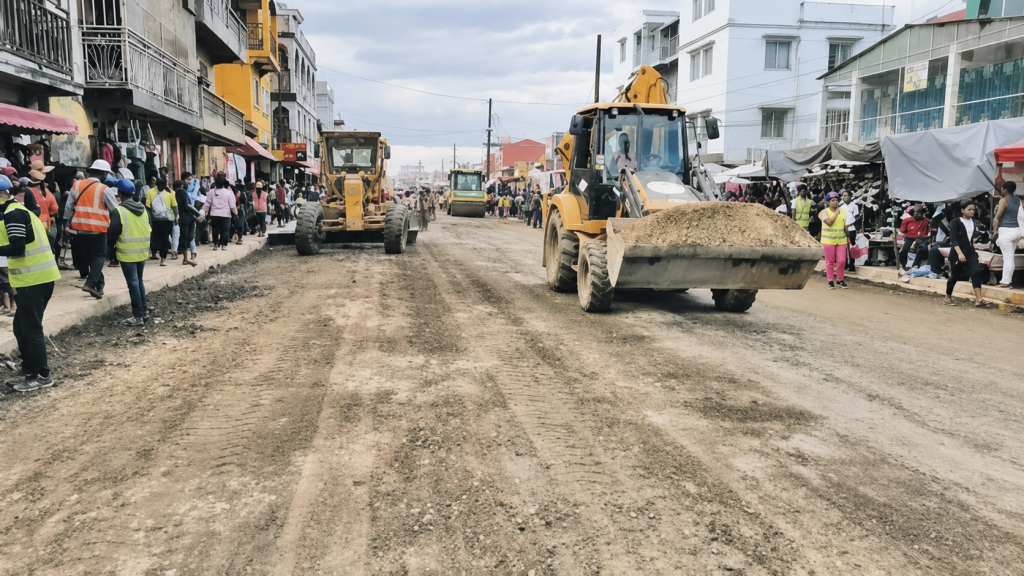
Several strategic road projects in Madagascar are currently facing delays due to logistical challenges related to the supply of bitumen, an essential material used in road rehabilitation and modernization works. The situation is affecting infrastructure projects financed by the World Bank and considered crucial for improving connectivity across the country.
During a joint review meeting between the Malagasy authorities and the World Bank, both parties assessed the progress of ongoing programs in the infrastructure and food security sectors. The discussions highlighted several logistical bottlenecks disrupting road construction projects, particularly difficulties linked to the importation and distribution of bitumen throughout the country.
According to Madagascar’s Ministry of Economy and Finance, these constraints are directly impacting several major national highways, including RN2, RN4, RN5, and RN7. These corridors play a key role in the country’s economy by facilitating trade, goods transportation, and population mobility between regions.
In response to the situation, the government and its technical partners are considering emergency measures to secure the supply of construction materials and ensure the continuity of ongoing works. The objective is to prevent further delays in infrastructure delivery, as several projects are already facing challenges related to logistics costs and weather conditions.
The issue comes at a time when infrastructure represents a significant share of World Bank investments in Madagascar. As of February 2025, the institution’s portfolio in the country was estimated at approximately $3.5 billion spread across 22 operations, with nearly 43% allocated to infrastructure projects, representing around $1.5 billion.
Alongside the road projects, authorities also reviewed the progress of the Rice Plus agricultural program, which aims to strengthen national rice production and support food self-sufficiency. The government says it intends to accelerate the implementation of public projects in order to improve disbursement rates and deliver visible results for the population.