
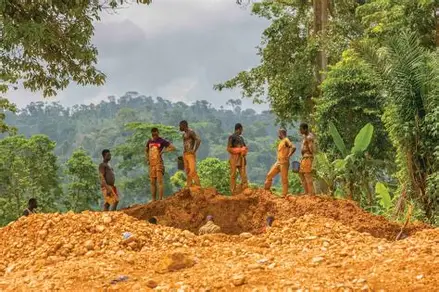
In the remote commune of Camopi, in eastern French Guiana, growing frustration over illegal gold mining has reached a turning point. Faced with a recent surge in clandestine mining activities, local residents have begun organizing their own efforts to curb a phenomenon that threatens the environment, public safety, and daily life.
On April 25, villagers set up a temporary river blockade aimed at disrupting the logistical supply chains of illegal miners. This symbolic action sought to halt the transport of fuel, equipment, and food essential to these operations, which are often carried out by garimpeiros from Brazil.
This grassroots mobilization comes amid a sharp resurgence in illegal gold mining. Around Camopi, the Guiana Amazonian Park had already identified 16 illegal sites in 2025, and 176 across the territory it manages levels not seen in several years. Across French Guiana as a whole, nearly 600 clandestine sites are currently active, involving an estimated 8,000 miners and producing between 5 and 6 tons of gold annually.
The activity is fueled in part by rising global gold prices, which continue to attract operators despite ongoing enforcement efforts by French authorities, particularly under Operation Harpie. However, these operations have struggled to achieve lasting results, as illegal networks continuously adapt to raids and equipment seizures.
The consequences for local communities, especially Indigenous populations, are severe. Illegal gold mining leads to significant deforestation—estimated at around 150 hectares per year—and pollutes waterways over distances of up to 100 kilometers, largely due to the use of mercury. These environmental damages directly impact food resources and public health, as communities rely heavily on the forest and rivers for survival.
Beyond environmental degradation, tensions have also intensified. Clashes have already occurred between residents and law enforcement, with some locals accusing authorities of obstructing community-led initiatives rather than supporting them.
Amid this growing sense of abandonment, Camopi residents are expressing increasing distrust toward the state’s response, which they view as insufficient given the scale of the problem. Their actions reflect a determination to reclaim control over their land, while also highlighting the limitations of current anti-mining strategies.
In this isolated region, where environmental, economic, and security challenges intersect, the residents’ initiative sends a strong signal. It raises broader questions about the role of the state and the need for a more effective and locally adapted response to combat a persistent crisis that continues to destabilize French Guiana.