
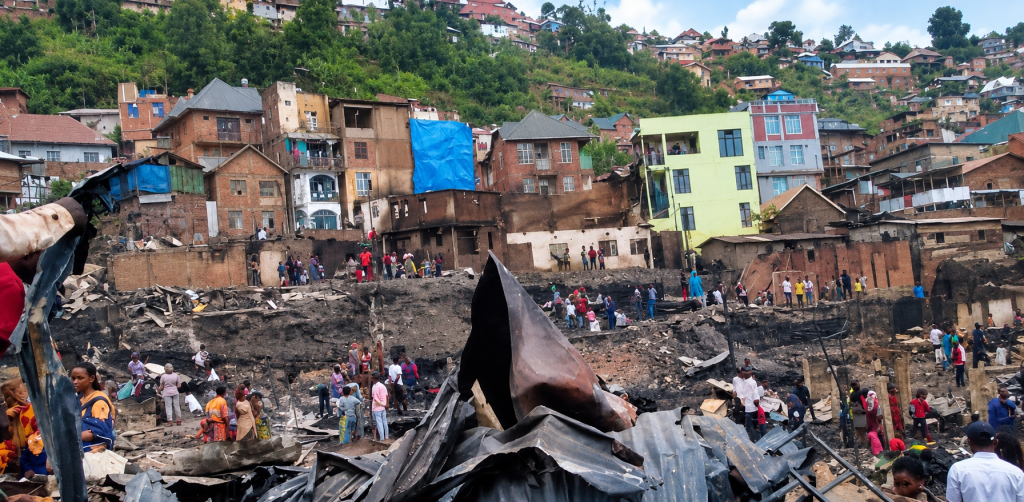
The Democratic Republic of the Congo (DRC) has been plunged into mourning following a devastating fire that broke out on Thursday, September 10, 2026, in Bukavu, South Kivu province. The blaze struck Furaha and Ujamaa schools in the Cimpunda neighborhood of Kadutu commune while students were attending classes. At least 24 students were reported dead, while dozens of others were injured. The death toll remains provisional and could rise as authorities continue to assess the situation.
According to initial reports, the fire is believed to have started in a nearby residential building before rapidly spreading to the two schools and several other structures in the area. The densely populated nature of the neighborhood, combined with the presence of numerous wooden structures, reportedly contributed to the rapid spread of the flames. Around 300 homes were also reportedly destroyed or seriously damaged.
The exact circumstances surrounding the outbreak of the fire have yet to be established. Authorities have announced that an investigation will be conducted to determine the cause of the disaster and assess whether safety measures were adequate in the affected schools and surrounding buildings.
The intensity of the fire triggered widespread panic among students and residents. Several children were reportedly trapped inside the school buildings, while others attempted to escape through narrow passageways. Emergency and medical services were mobilized to treat the injured, including people affected by smoke inhalation and other injuries sustained during the evacuation.
The tragedy quickly prompted an outpouring of grief and solidarity from political leaders, public figures and civil society representatives across the country. Numerous personalities expressed their condolences to the families who lost loved ones and called for urgent assistance for the injured and affected residents.
Vital Kamerhe, president of the Union for the Congolese Nation and a member of parliament representing Bukavu, expressed deep sorrow over the tragedy. He paid tribute to the students who lost their lives and highlighted the difficult circumstances already facing South Kivu. He stressed the importance of restoring lasting peace and stability in the region, which has been severely affected by years of insecurity.
Opposition leader Moïse Katumbi also expressed his dismay following the disaster. He described the incident as a major tragedy and called for immediate support for the victims and their families. He also emphasized the need to strengthen safety measures in schools to prevent similar disasters from occurring in the future.
Senator Bahati Lukwebo drew attention to the challenges faced by emergency responders in Bukavu. The urban configuration of some neighborhoods, particularly narrow and inadequate roads, can make it difficult for emergency vehicles to reach affected areas quickly. The disaster has therefore renewed concerns about urban planning, emergency access and fire-prevention infrastructure in the city.
First Lady Denise Nyakeru Tshisekedi, who is originally from South Kivu, also reacted with emotion. She expressed her condolences to the families who lost their children and offered her support to those injured in the fire. Her reaction reflected the profound emotional impact of the tragedy on the local community.
Nobel Peace Prize laureate Denis Mukwege, who is also from Bukavu, expressed his concern over the scale of the disaster. He stressed that the tragedy should not be treated simply as an isolated incident, given the vulnerability of local communities and the broader challenges facing the region. His reaction also highlighted the need for stronger prevention measures and better protection for residents.
Former South Kivu governor Théo Ngwabidje Kasi also expressed solidarity with the bereaved families. Meanwhile, National Assembly President Aimé Boji Sangara called for unity among the people of Bukavu as the city faces another major tragedy. He urged residents to remain united and support one another during this difficult period.
The disaster occurred against the backdrop of an already highly fragile situation in South Kivu. Bukavu has faced years of insecurity and humanitarian challenges, while densely populated neighborhoods remain vulnerable to fires and other emergencies. The latest incident has therefore raised broader questions about school safety, evacuation procedures, emergency services, road accessibility and fire-prevention systems.
As rescue and medical operations continue, authorities are working to establish the exact number of victims, provide treatment to the injured and assess the material damage. The tragedy has also intensified calls for stronger safety standards in schools and improved emergency-response capabilities.
Beyond the immediate loss of life, the fire has left families, students, teachers and the wider Bukavu community facing a profound period of mourning. The disaster is likely to fuel renewed discussions about the protection of children in schools, the preparedness of emergency services and the need for stronger prevention measures to ensure that such a tragedy does not happen again.