
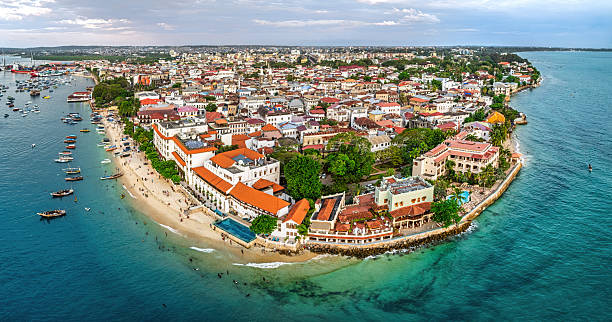
The archipelago of Zanzibar, a flagship destination of Tanzania, is experiencing a notable rebound in its tourism sector. In February 2026, international tourist arrivals increased by 4.9% compared to the same period in 2025, confirming a steady recovery in one of the region’s most vital economic industries.
A total of nearly 87,000 visitors were recorded during the month, up from just over 82,000 a year earlier. While this growth remains moderate, it reflects renewed interest in the destination amid a global environment still shaped by economic uncertainty and evolving travel patterns. However, this performance should be viewed in context, as it represents a decline compared to January 2026 figures, highlighting the seasonal nature of tourism in the archipelago.
Visitor demographics reveal a strong dominance of the European market, accounting for more than three-quarters of total arrivals. African and Asian tourists represent smaller shares, although their presence is gradually increasing. This reliance on European travelers presents both an opportunity and a vulnerability, prompting local authorities to pursue diversification strategies to strengthen the sector’s resilience.
Tourism in Zanzibar remains overwhelmingly leisure-driven. The vast majority of visitors travel for holidays, drawn by the island’s white-sand beaches, tropical climate, and rich cultural heritage, particularly the historic city of Stone Town. Air travel continues to be the primary gateway to the destination, underscoring the importance of airport infrastructure in supporting tourism growth.
Economically, tourism is a cornerstone of Zanzibar’s development. It plays a crucial role in generating foreign exchange revenues, creating jobs, and attracting foreign investment. Authorities are now aiming to accelerate this momentum, with an ambitious target of reaching one million annual visitors in the coming years—a goal that will require sustained investment and continuous improvement of the tourism offering.
Despite these positive trends, several structural challenges remain. Enhancing infrastructure, improving service quality, strengthening workforce training, and better managing tourist flows are among the key priorities. Efforts are also underway to streamline entry procedures and improve coordination among stakeholders in the tourism ecosystem.
In this context, the increase recorded in February 2026 stands as a positive indicator of Zanzibar’s ongoing tourism recovery. Supported by a rebound in international demand and proactive public policies, the archipelago is well positioned to reinforce its status as a leading destination in East Africa—provided it continues to implement reforms that ensure sustainable and inclusive growth.