
As the conflict between the United States and Iran continues, the US administration faces a major challenge: how to force Tehran to accept an agreement without triggering an uncontrollable escalation in a region already deeply destabilized. Despite several military operations and an extensive air campaign, Washington has struggled to secure the political concessions it is seeking from Iran’s leadership.
Against this backdrop, the US military is now exploring new strategies to increase pressure on Iran. Military officials have asked analysts and intelligence specialists to consider “creative” and “unconventional” ways of putting additional pressure on Tehran. The initiative highlights the difficulties facing the United States as it attempts to turn its overwhelming military superiority into tangible political results.
Since the outbreak of hostilities, US forces have focused their operations on various strategic targets in Iran, including military infrastructure, ballistic missile capabilities, and facilities linked to the country’s nuclear program. Washington’s objective is to reduce Tehran’s ability to attack US forces and their allies while pushing Iranian authorities back toward negotiations.
However, US assessments indicate that airstrikes alone may not be enough to fundamentally change Iran’s position. Tehran’s military capabilities have been significantly affected, but Iran retains the ability to retaliate and continues to have the means to complicate US operations across the region. This situation has fueled debate in Washington over whether the military strategy needs to be adjusted.
The Strait of Hormuz remains one of the main flashpoints. This strategic waterway, located between Iran and the Arabian Peninsula, plays a crucial role in global oil and gas transportation. Any major disruption to maritime traffic through the strait could have significant consequences for international energy markets, driving up prices and adding to global economic pressures.
Tehran has several means of exerting pressure around this strategic area. Iran’s naval capabilities, missiles, and drones are important elements of its military posture. For Washington, ensuring freedom of navigation through the Strait of Hormuz is therefore a key objective. Yet any operation designed to secure the area on a long-term basis could also trigger further escalation.
At the same time, several military scenarios are reportedly being considered in the United States. One option would involve significantly intensifying airstrikes for a limited period in an attempt to further weaken Iran’s military capabilities, particularly its missile arsenal. Other options could target nuclear or military facilities that are difficult to reach, including deeply buried infrastructure.
These facilities pose a particularly complex challenge for the US military. Some Iranian installations were designed to withstand airstrikes and are protected by extensive underground structures. Completely destroying them could require substantial military resources and, in the most extreme scenario, raise the possibility of a ground intervention.
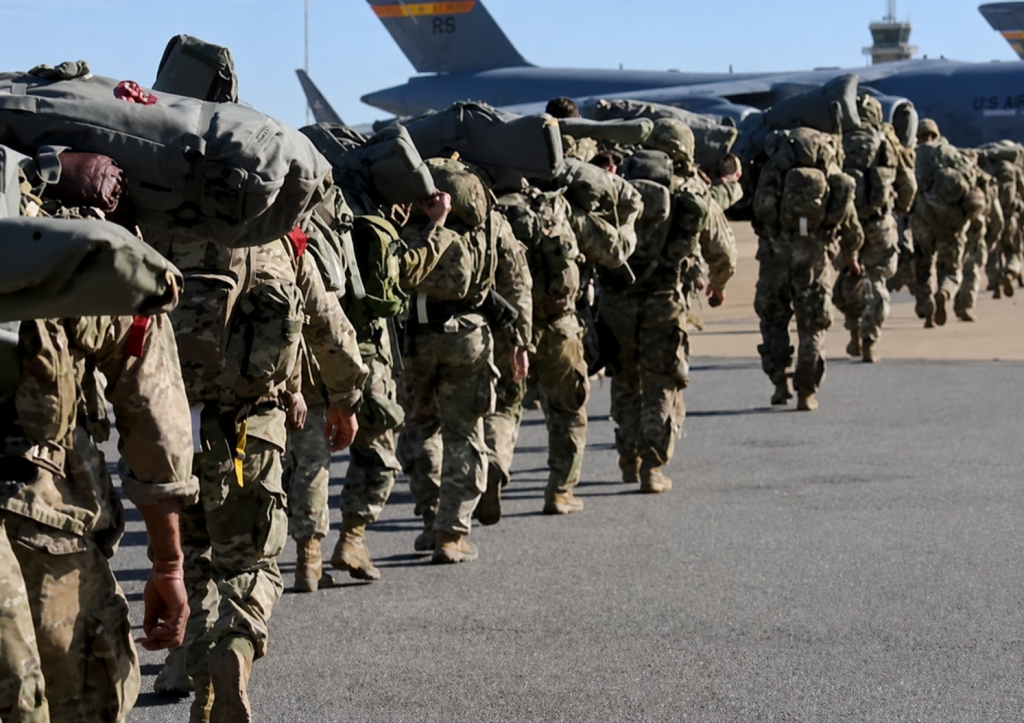
Deploying US troops on the ground would nevertheless represent a major change in the nature of the conflict. A ground operation would expose American soldiers to significantly greater risks and could transform what has largely been an air campaign into a prolonged and difficult war. Such a prospect would be particularly sensitive for President Donald Trump, who has repeatedly promised to limit US involvement in lengthy foreign conflicts.
The human cost of the war is also increasingly influencing US decision-making. Several American service members have already been killed in the fighting, while US forces deployed across the Middle East remain vulnerable to Iranian attacks and actions by groups aligned with Tehran. Any further escalation could therefore lead to additional casualties among American troops and regional partners.
Military resources are another growing concern. A prolonged war requires large quantities of missiles, ammunition, and air-defense systems. The United States must also protect its bases and forces across the Middle East from Iranian attacks. Heavy use of missile interceptors could gradually put pressure on available stocks and make it more difficult for Washington to maintain effective defenses across multiple fronts.
Washington must also consider the humanitarian consequences of intensifying the bombing campaign. Additional strikes against civilian or critical infrastructure, including bridges, energy networks, or water production and distribution facilities, could have severe consequences for the Iranian population. Such developments could also increase international criticism of the United States and make diplomatic efforts even more difficult.
The position of Gulf countries is another crucial factor. Several governments in the region fear that a prolonged confrontation between Washington and Tehran could turn their territory into a battlefield. The United States maintains numerous military bases in the region, while Iran possesses capabilities that could threaten some American facilities and the infrastructure of US allies.
Regional leaders are therefore seeking to prevent an all-out confrontation. Gulf states want to protect their security, energy infrastructure, and international economic ties. An expansion of the conflict could directly affect their economies, disrupt energy exports, and trigger another crisis in global markets.
At the same time, diplomacy remains a possibility despite the continuing military tensions. Washington is seeking to maintain maximum pressure on Tehran in order to strengthen its position in any potential negotiations. US objectives include securing guarantees regarding Iran’s nuclear program and reducing military capabilities that could threaten the United States and its allies.
Iran, meanwhile, must contend with the damage caused by the strikes while attempting to preserve its defensive capabilities and regional influence. Iranian authorities have an interest in avoiding an all-out war that could cause extensive destruction, but they must also demonstrate that they will not surrender under American pressure.
Donald Trump’s central dilemma is therefore how to secure concessions from Iran without becoming involved in a lengthy and costly ground war. Intensifying airstrikes could further weaken Iran’s military capabilities, but they do not guarantee that Tehran will accept US demands. A ground intervention, by contrast, could produce far greater military, political, and humanitarian consequences.
The situation highlights the limits of military power when it is not accompanied by a clear political strategy. The United States possesses overwhelming military superiority, but destroying infrastructure or neutralizing military capabilities does not necessarily translate into political capitulation. Iran retains means of resistance and can continue using its military capabilities and regional influence to maintain pressure on Washington.
The future of the conflict will therefore depend largely on the ability of both sides to prevent further escalation while seeking a diplomatic way forward. Washington must decide whether to intensify its military campaign, maintain limited pressure, or place greater emphasis on negotiations. Tehran, for its part, must determine how far it can resist American demands without triggering an even larger confrontation.
As the United States searches for new ways to increase pressure on Iran, the greatest risk remains a military spiral that becomes increasingly difficult to control. A new offensive could trigger Iranian retaliation, threaten US forces and their allies, disrupt maritime traffic through the Strait of Hormuz, and create further pressure on global energy markets. In this context, pursuing a diplomatic solution remains one of the most important ways to prevent the conflict from developing into an even broader regional war.