
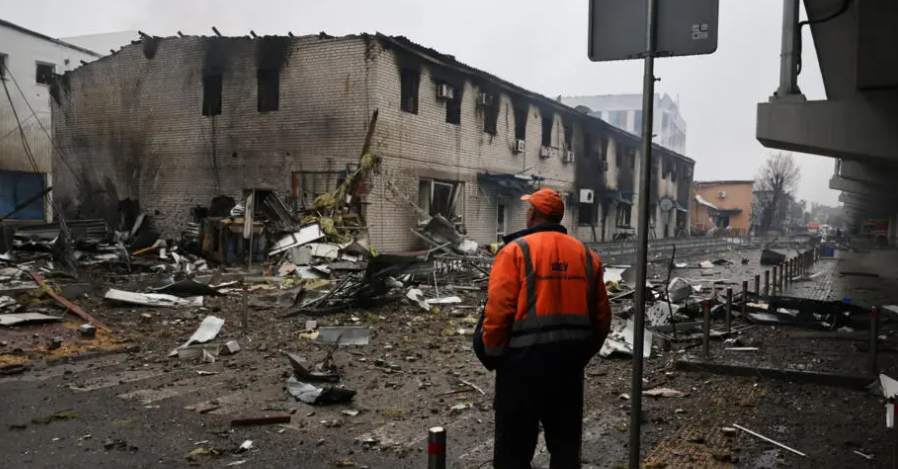
Ukraine’s capital, Kyiv, came under renewed Russian attack overnight from Thursday, November 19, to Friday, November 20, 2026. Missile strikes and drone attacks left at least three people dead and two others injured, according to the city’s military administration. The bombardments also damaged two major bridges crossing the Dnipro River, disrupting traffic between the two banks of the capital.
According to Kyiv Mayor Vitali Klitschko, several bridges were hit during the Russian attacks. The Podilsko-Voskresensky and Darnytsky bridges sustained damage, while the Pivdenny Bridge was also targeted, although the full extent of the destruction had not been immediately established. Following the strikes, traffic on the Podilsko-Voskresensky Bridge was suspended in the direction connecting the right bank to the left bank. These infrastructures play a crucial role in the daily transportation of millions of residents across the Ukrainian capital.
The bombardments also sparked fires in several residential buildings, particularly in the Obolon and Podil districts. In Kharkiv, in northeastern Ukraine, a drone attack damaged a hospital, injuring several people and shattering numerous windows. These latest strikes highlight the scale of Russia’s military operations, which continue to affect urban infrastructure and essential facilities across the country.
The offensive comes a day after Russian President Vladimir Putin issued threats against Ukraine. On Thursday, November 19, he announced that Moscow would retaliate for recent Ukrainian attacks on the Crimean Bridge, promising a particularly severe response. This strategic infrastructure, which connects Russian territory to the Crimean Peninsula, annexed by Moscow in 2014, has been targeted several times by Ukrainian forces in recent weeks. The latest attacks reportedly caused part of its main structure to collapse and disrupted both road and rail traffic.
Meanwhile, Russia’s Ministry of Defence confirmed that it had carried out large-scale strikes using precision-guided missiles and drones. According to Moscow, the targets included facilities linked to Ukraine’s military-industrial complex, storage sites used for missile and drone production, as well as energy and transport infrastructure in Kyiv and other regions of the country.
This latest escalation highlights the intensification of hostilities between the two countries, as the war continues and tensions surrounding strategic infrastructure remain particularly high. It also comes amid a delicate diplomatic situation, marked by international discussions on possible ways to resolve the conflict. As winter approaches, repeated attacks on energy and transport infrastructure are raising concerns about further difficulties for Ukrainian civilians, who are already facing the consequences of several years of war.
