
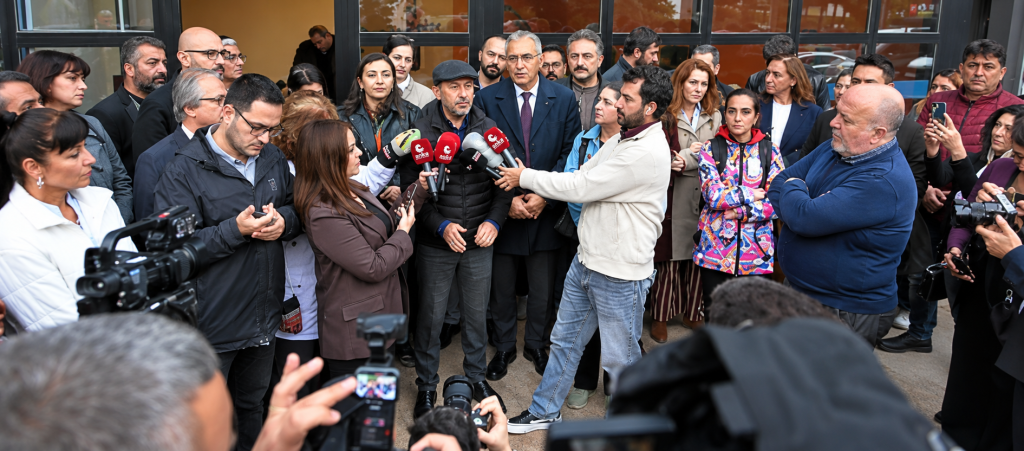
On Wednesday, October 14, 2026, Turkish police took control of the headquarters of Halk TV, one of Turkey’s leading television channels associated with the opposition, in Istanbul. The operation, which took place early in the morning, disrupted live broadcasts and was followed by the appointment of a court-appointed administrator to take over the channel’s management. According to reports from the broadcaster, employees were also prevented from accessing the premises during the operation.
The intervention is part of a judicial investigation targeting Cafer Mahiroğlu, the owner of Halk TV. Authorities are investigating allegations involving corruption, bid-rigging and money laundering. As part of the case, arrest warrants were issued for 17 people, and 11 individuals were reportedly detained, including a journalist and people close to the channel’s owner. These allegations remain subject to judicial proceedings and do not, at this stage, constitute proof of guilt.
The takeover of Halk TV comes amid persistent tensions between the Turkish government and media outlets critical of President Recep Tayyip Erdoğan’s administration. The channel has notably attracted attention for its coverage of legal proceedings involving Ekrem İmamoğlu, the imprisoned mayor of Istanbul and a prominent opposition figure. The police operation also comes as legal proceedings involving this political case and hundreds of other defendants continue to attract considerable public attention.
The move has prompted reactions from opposition figures and press freedom organizations. Several political representatives have denounced what they consider an attack on media independence and raised concerns about the implications for media pluralism in Turkey. Organizations defending journalists have also called on the authorities to safeguard the broadcaster’s editorial independence and allow its staff to resume their work.
Beyond the judicial investigation, the takeover of Halk TV has renewed debate over freedom of expression, media independence and the relationship between judicial institutions and political power in Turkey. The developments in this case could have significant implications for the Turkish media landscape and for the ability of opposition-oriented broadcasters to carry out their public information role.