
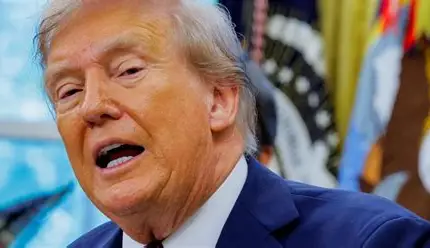
Relations between the United States and Germany have entered a new phase of tension after President Donald Trump raised the possibility of reducing the American military presence on German soil, a move that could significantly impact Europe’s strategic balance. The statement comes at a time of already strained diplomacy, marked by deep disagreements with German Chancellor Friedrich Merz, particularly over the handling of tensions involving Iran.
Washington is reportedly reviewing the deployment of approximately 36,000 U.S. troops currently stationed in Germany. Although this number is far lower than during the Cold War, it remains critical for American military operations across Europe, the Middle East, and Africa. Key installations such as Ramstein Air Base and command centers in Stuttgart serve as essential logistical and operational hubs, especially within the framework of the NATO.
The current dispute stems from a series of public criticisms exchanged between the two leaders. Chancellor Merz questioned the effectiveness of U.S. strategy regarding Iran, prompting a sharp response from Trump. The American president not only criticized Germany’s stance but also suggested that the U.S. might reconsider its military commitments to allies perceived as insufficiently cooperative.
This approach echoes Trump’s earlier policy stance during his first term, when he sought to significantly reduce troop levels in Germany, arguing that European allies were not contributing enough to collective defense spending. At that time, institutional resistance in Washington, particularly from Congress, limited the scope of those plans.
Despite the strong rhetoric, many analysts believe that a large-scale withdrawal remains unlikely in the short term. U.S. bases in Germany are a cornerstone of American global military strategy and play a vital role in coordination with European allies. Moreover, logistical, political, and legal constraints make any rapid redeployment highly complex.
On the German side, officials are working to ease tensions. Friedrich Merz has reaffirmed the importance of the transatlantic partnership and NATO, while also emphasizing Germany’s intention to strengthen its own defense capabilities in response to an increasingly unstable global environment. This reflects a broader European trend toward reducing dependence on U.S. security guarantees.
Ultimately, this dispute highlights a gradual reshaping of transatlantic relations. With rising geopolitical tensions, evolving defense priorities, and growing expectations from Washington, the future of cooperation between the United States and Europe appears increasingly uncertain, placing the role of American military presence in Europe at the center of global strategic debates.