
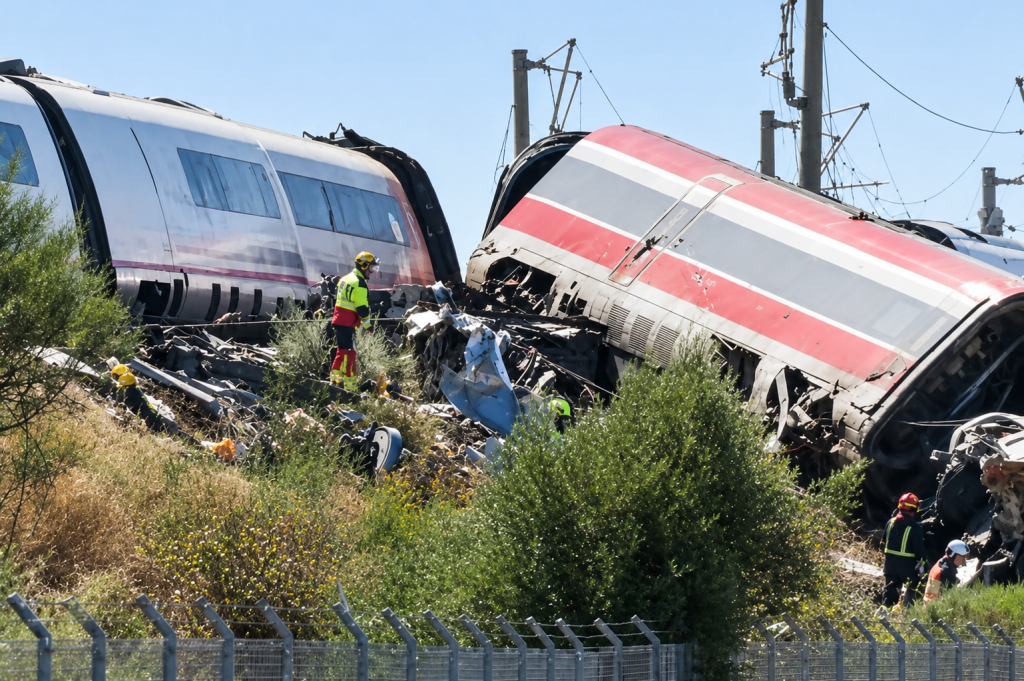
Spain has been struck by a major railway tragedy following a collision between two high-speed trains on Wednesday, October 28, 2026, near the town of Urda, in the Castile-La Mancha region, approximately 150 kilometres south of Madrid. According to a preliminary assessment released by regional authorities, at least 64 people have lost their lives. The death toll could rise as rescue operations continue at the scene of the accident.
The crash occurred on the railway line connecting Madrid to Andalusia, in southern Spain. Two trains operated by different companies were involved: an AVE train operated by the national railway company Renfe, carrying 397 passengers, and a train operated by private company Iryo, with 147 passengers on board. The collision reportedly caused several carriages to derail, with some thrown down an embankment beside the railway tracks, making rescue efforts significantly more difficult.
In response to the scale of the disaster, emergency services have deployed substantial resources. Firefighters, ambulance crews, medical helicopters and mobile intensive care units have been dispatched to evacuate passengers, treat the injured and search for additional victims. Some sections of the carriages remain difficult to access, making rescue operations particularly challenging. Regional authorities have activated emergency procedures to coordinate the response and provide assistance to those affected by the tragedy.
The exact circumstances of the collision remain unclear. Investigators will need to reconstruct the sequence of events, examine the conditions under which the trains were operating and determine whether any technical failures or other factors contributed to the accident. Railway services on the high-speed line between Madrid and Andalusia have been suspended following the crash, while Iryo has announced cancellations affecting services departing from Madrid-Atocha station towards southern Spain.
The disaster has also prompted an emotional response from Spain’s political leaders. Prime Minister Pedro Sánchez expressed his dismay over the accident and offered his support to the victims and their families. The tragedy has renewed concerns about railway safety in Spain, particularly following another deadly railway accident near Adamuz, in Andalusia, earlier in 2026. The succession of serious incidents has intensified public attention on the safety and reliability of the country’s railway network.
As the rescue operation continues, Spanish authorities face two urgent priorities: assisting survivors and establishing the causes of the collision. The coming hours and days will be crucial in determining the final death toll and answering the many questions surrounding one of the country’s most serious railway disasters.
