
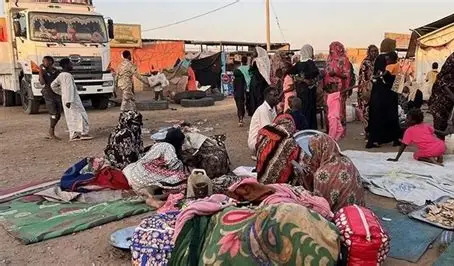
The United Nations has issued a fresh warning over the rapidly worsening situation in South Sudan, a country already weakened by years of internal conflict, political instability, and recurring humanitarian crises. According to UN officials, armed tensions are escalating in several regions, raising fears of a large-scale return to the violence that plunged the world’s youngest nation into a deadly civil war only a few years after gaining independence in 2011.
Concerns are particularly focused on Jonglei State and the strategic town of Akobo, where recent clashes have taken place between government forces and opposition groups. The UN noted that the fighting has triggered new waves of displacement, while thousands of families had already fled their villages in recent months. Humanitarian agencies say insecurity is severely limiting access to aid, especially the delivery of food, medicine, and clean water.
The United Nations Mission in South Sudan (UNMISS) has called on all parties to exercise restraint and return to dialogue, warning that the current escalation directly threatens the 2018 peace agreement. That deal helped reduce fighting between the camps of President Salva Kiir and his long-time rival Riek Machar, but its implementation remains incomplete and marked by repeated institutional delays.
Beyond the military dimension, the crisis is also taking on a deeply humanitarian face. The United Nations reminds that millions of South Sudanese already depend on international aid to survive. Recent violence, combined with recurring floods, rising food prices, and weak health infrastructure, is increasing the vulnerability of communities. In some areas, hospitals are overwhelmed, while schools have closed or are operating at reduced capacity.
International agencies are also concerned about a lack of funding. Several emergency programs are at risk as needs continue to rise sharply. Without rapid support from donors, millions of people could be left without life-saving assistance in the coming months. This comes at a time when global attention remains focused on other major conflicts, reducing visibility for the South Sudan crisis.
Since independence, South Sudan has struggled to build stable institutions and a viable economy despite significant oil resources. Political rivalries, ethnic divisions, and chronic insecurity have hindered development. For the United Nations, the current phase represents a critical moment: without swift de-escalation and genuine political commitment, the country risks falling back into a cycle of violence with potentially serious regional consequences.