
Senegal is set to benefit from CFA 340 billion in new financing, equivalent to approximately $599 million, announced by the World Bank Group as part of its continued partnership with Dakar. The funding is expected to support several priority sectors of the Senegalese economy, including agriculture, transport, and programs aimed at strengthening the resilience of young people and women.
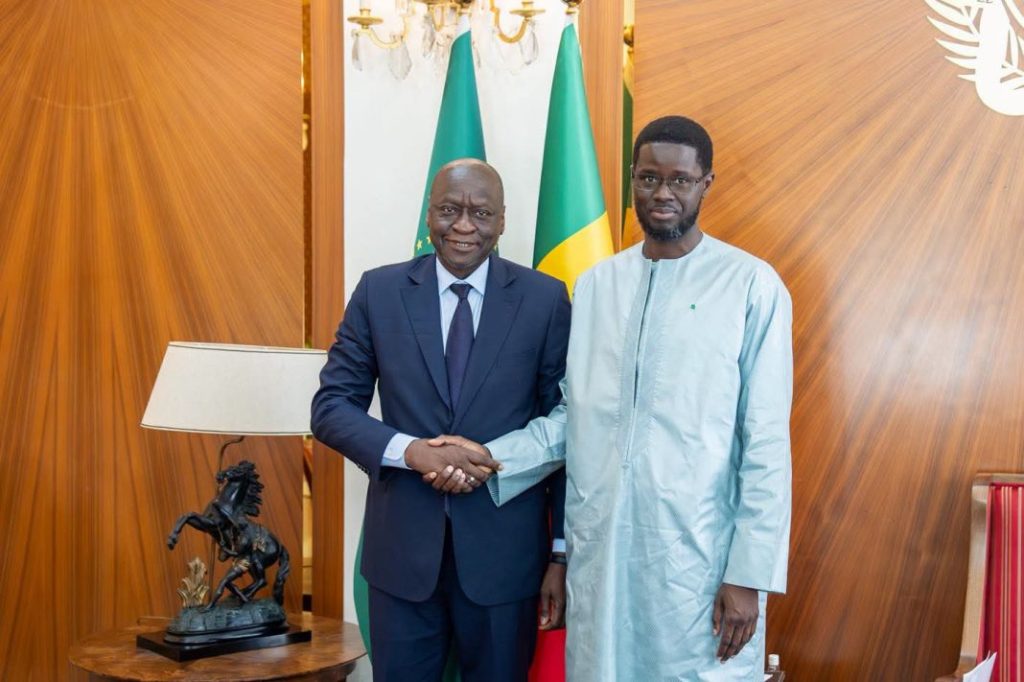
The announcement was made following a meeting between Senegalese President Bassirou Diomaye Faye and Ousmane Diagana, World Bank Vice President for West and Central Africa. The visit comes at a time when Senegal is seeking to strengthen its financing capacity and accelerate the implementation of its economic and social priorities.
A significant portion of the new financing is expected to be directed toward agriculture, a key sector for employment and income for a large share of the population. World Bank support aims in particular to promote agricultural activities and improve the conditions that allow rural communities to contribute more fully to economic growth.
The transport sector is also among the areas targeted by the financing. Investment in transport infrastructure is considered an important driver of economic development, as it can improve mobility, facilitate trade, and strengthen connections between the country’s different regions.
The World Bank also intends to support programs designed to strengthen the economic and social resilience of young people and women. These groups play a central role in Senegal’s development policies, particularly in employment, entrepreneurship, and economic inclusion. The objective is to help create more opportunities while strengthening their ability to cope with economic and social challenges.
The new commitment comes on top of an already significant financial relationship between Senegal and the World Bank. Over the past year, the institution had reportedly disbursed around CFA 110 billion through results-based programs. These resources could be used by the government to finance certain sovereign expenditures as well as development investments.
The new financing also comes at a particularly sensitive time for Senegal’s public finances. The country is facing major challenges related to debt, government financing needs, and the need to preserve investments that are essential to its development. In this context, support from international financial partners remains important for maintaining development programs while continuing efforts to strengthen public finances.
Beyond the amount involved, the new funding represents an important signal regarding the continuation of cooperation between Senegal and the World Bank Group. For the Senegalese government, the challenge will now be to turn these resources into tangible results, particularly in agricultural development, infrastructure improvement, employment, and the economic empowerment of young people and women.
With this CFA 340 billion financing package, the World Bank is reaffirming its commitment to supporting Senegal in several strategic areas. The success of this new cooperation will nevertheless depend on the country’s ability to ensure that the resources are used efficiently, transparently, and sustainably so that the financing delivers tangible benefits to the Senegalese economy and population.