
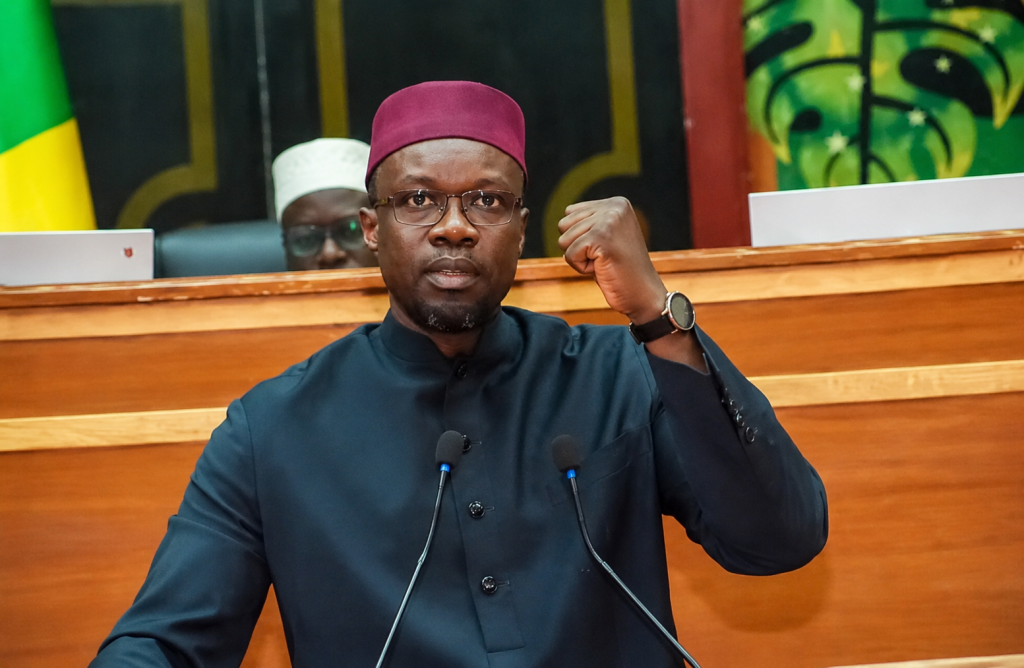
Senegal’s political landscape has entered a new phase of uncertainty following the resignation of El Malick Ndiaye, Speaker of the National Assembly, a move that could pave the way for former Prime Minister Ousmane Sonko to take over the position just days after being dismissed by President Bassirou Diomaye Faye.
El Malick Ndiaye, considered one of Sonko’s closest allies within the ruling PASTEF party, announced his resignation on Sunday through a Facebook statement, describing it as a “personal decision” made in the “best interest of the nation.” His departure comes amid growing political tensions between President Bassirou Diomaye Faye and his former head of government.
According to an official parliamentary document released Sunday evening, Senegalese lawmakers are expected to meet on Tuesday for a plenary session to vote on Ousmane Sonko’s reinstatement as a member of parliament and elect a new Speaker of the National Assembly. With PASTEF controlling 130 of the 165 seats following the 2024 legislative elections, Sonko’s appointment is widely viewed as highly likely.
The development marks another significant turning point in the political split between Bassirou Diomaye Faye and Ousmane Sonko, who were long seen as inseparable allies. The two leaders came to power in 2024 under the slogan “Diomaye is Sonko,” symbolizing political renewal and hope for many young Senegalese voters. However, deep disagreements have reportedly emerged in recent months over governance, political transparency, and the pace of promised reforms.
Just hours before his dismissal as Prime Minister, Sonko openly criticized President Faye before lawmakers, accusing the administration of lacking transparency in the management of political funds and moving too slowly in pursuing corruption cases involving former officials from ex-President Macky Sall’s administration.
Despite being removed from office, Ousmane Sonko continues to enjoy strong support among his followers. Hundreds of supporters gathered outside his residence in Dakar after the announcement of his dismissal, turning the political episode into a visible show of public backing.
If Sonko becomes Speaker of the National Assembly, the move could significantly reshape Senegal’s balance of power. While President Diomaye Faye would remain head of the executive branch, Sonko would gain a strategic parliamentary position capable of reinforcing his political influence at a time when Senegal continues to face economic and social challenges.