
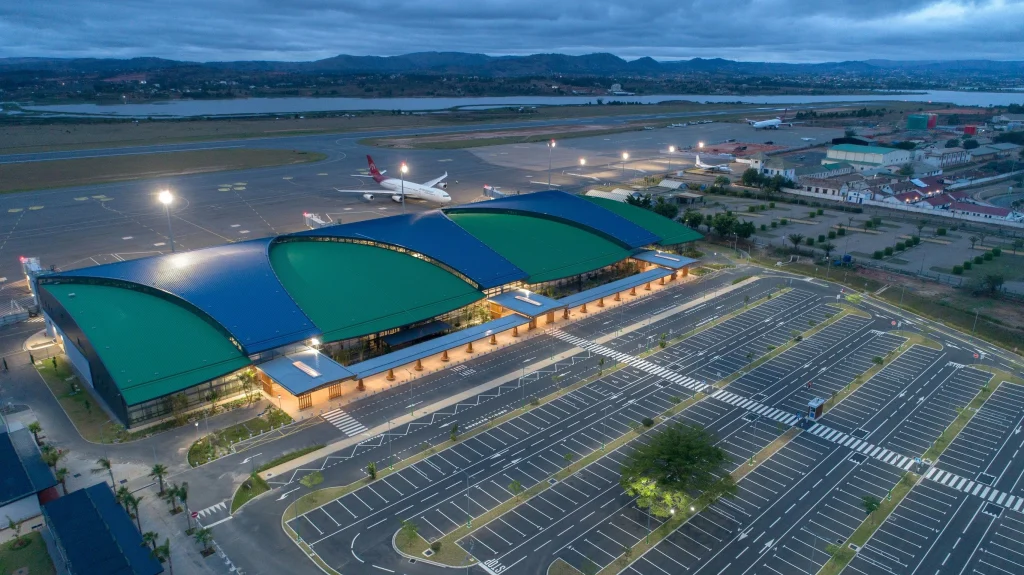
Ravinala Airports, the company responsible for managing the international airports of Antananarivo and Nosy Be, has recently issued a clarification regarding the scope of its responsibilities, particularly in relation to airport security. This statement comes amid ongoing discussions about the roles and coordination of different stakeholders within Madagascar’s aviation sector.
The airport operator emphasized that airport security does not fall within its direct operational mandate. According to the company, its primary mission focuses on the management, development, and maintenance of airport infrastructure, as well as improving the overall quality of services provided to passengers and airlines. These responsibilities include ensuring the functionality of terminals, runways, technical facilities, and passenger services, all of which are essential to the smooth operation of airport activities.
In contrast, security-related functions are handled by specialized authorities and government security services. These include law enforcement agencies and aviation security bodies that are officially mandated to oversee screening procedures, passenger and baggage control, surveillance operations, and emergency response within airport zones. Ravinala Airports underlines that these institutions are the ones legally empowered to ensure compliance with national and international aviation security standards.
The company also highlights that airport operations rely on a coordinated system involving multiple actors working together. While it does not directly manage security enforcement, Ravinala Airports plays an important supporting role by providing and maintaining the necessary infrastructure for security services to operate effectively. This includes access to facilities, technical support, and logistical coordination with relevant authorities.
Through this clarification, Ravinala Airports aims to reinforce a better understanding of the distribution of responsibilities within airport ecosystems. The company stresses that aviation safety and security are collective outcomes achieved through structured cooperation between infrastructure managers, regulatory authorities, and security agencies.
Furthermore, the operator notes that its contribution to safety is indirect but still significant. By investing in modern infrastructure, upgrading airport facilities, and ensuring operational efficiency, Ravinala Airports helps create an environment where security services can function under optimal conditions.
This statement aligns with international civil aviation standards, which clearly distinguish between airport management functions and security enforcement responsibilities. In such frameworks, airport operators focus on infrastructure and service quality, while designated authorities handle security and regulatory compliance.
By reiterating this distinction, Ravinala Airports seeks to ensure transparency in its role and to highlight the importance of coordinated governance in maintaining safe and efficient airport operations in Madagascar.