
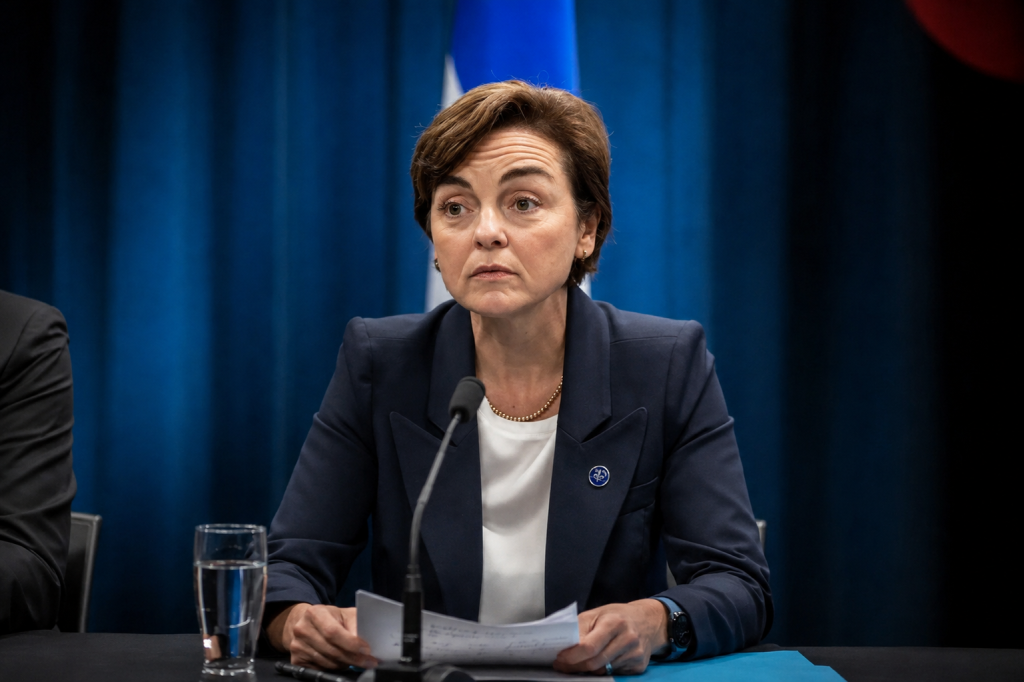
Quebec is preparing to respond to a new escalation in trade tensions with the United States. As new 50% U.S.tariffs on a range of Canadian products came into effect on Saturday, August 22, 2026, the Quebec government announced measures aimed at protecting businesses, workers and the sectors most exposed to the new trade barriers.
Quebec Premier Christine Fréchette convened her cabinet to assess the potential economic consequences of the new tariffs and determine what support measures should be introduced. The government also plans to establish crisis-response teams bringing together government representatives, business leaders and agricultural stakeholders. These meetings are intended to identify the companies most vulnerable to the tariffs and develop an action plan for the coming weeks.
The announcement follows the failure of negotiations between Ottawa and Washington to reach an agreement that could have prevented the new tariffs from taking effect. Canadian and U.S. officials had been engaged in intensive discussions, but the negotiations failed to produce a compromise. The brief postponement of the tariffs provided only a few additional days for talks before the new measures came into force.
For Quebec, the economic stakes are particularly high because of the province’s strong commercial relationship with the United States. The new tariffs could affect billions of dollars in Quebec exports to the American market. Several sectors are particularly exposed, including steel, aluminum, agriculture, forestry and food production.
The Quebec government is therefore considering financial and economic assistance for companies facing higher costs or reduced competitiveness in the U.S. market. Quebec’s Minister of International Relations and La Francophonie, Christopher Skeete, had previously indicated that the government could consider financial assistance for affected businesses, while calling on the federal government to contribute to the effort.
The objective is to prevent the new tariffs from triggering business closures, job losses or a significant decline in investment. Small and medium-sized enterprises are a particular concern because they generally have fewer financial resources than large corporations to absorb sudden increases in costs or rapidly develop alternative markets.
The Quebec government also intends to work closely with Ottawa to coordinate the response. This cooperation is essential because international trade policy falls primarily under federal jurisdiction, while Quebec plays a major role in supporting businesses, workers and regional economic development.
The trade dispute could also accelerate efforts to diversify Quebec’s export markets. Heavy dependence on the U.S. market has become an increasingly significant risk as tariff uncertainty continues. Quebec companies may therefore be encouraged to expand their presence in other Canadian provinces as well as in Europe, Asia and other international markets.
Such diversification would reduce companies’ exposure to decisions made in Washington and could strengthen Quebec’s economic resilience in the long term. The government has already explored measures designed to help businesses find new customers abroad and promote locally produced goods.
The possibility of retaliatory measures also remains part of the broader Canadian response. However, Quebec and Ottawa must strike a delicate balance between defending Canadian economic interests and avoiding a further escalation of the trade conflict. Excessive retaliation could increase the price of imported goods and create additional pressure on Canadian consumers and businesses.
The authorities are therefore seeking a strategy that combines financial assistance, export diversification, support for local products and close coordination with the federal government.
Beyond the immediate economic measures, the latest tariff dispute highlights Quebec’s vulnerability to decisions made by its largest trading partner. The coming weeks will be crucial in determining the real impact of the 50% tariffs and whether Canada and the United States can eventually return to the negotiating table.
For Christine Fréchette’s government, the message is clear: Quebec intends to defend its businesses and workers and will not remain passive in the face of the new U.S.tariff offensive. The crisis-response measures now being prepared will have to translate this political commitment into concrete support as Quebec companies enter another period of economic and commercial uncertainty.