
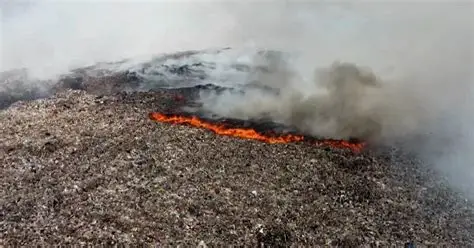
In the Philippines, a persistent fire at a large open-air landfill is causing growing concern among authorities and local communities due to its serious health and environmental impacts. Located in Navotas, on the outskirts of Manila on the island of Luzon, the landfill has been burning since April 10, marking nearly three weeks of a fire that has proven extremely difficult to contain.
The blaze, fueled by massive amounts of accumulated waste, is producing thick toxic smoke that spreads across nearby residential areas. These fumes contain hazardous substances released from the burning of plastics, chemicals, and other materials, exposing thousands of residents to increased risks of respiratory illnesses, eye irritation, and potentially more severe long-term health conditions. Health officials have issued warnings, particularly for vulnerable groups such as children, the elderly, and individuals with pre-existing respiratory diseases.
Emergency services have struggled to bring the fire under control, largely due to the nature of landfill waste, which can sustain slow, deep-seated combustion. Fires in such environments often burn underground for extended periods, making complete extinguishment highly challenging. This situation also highlights the limitations of waste management infrastructure in densely populated urban areas.
Beyond the immediate health risks, the environmental consequences are equally alarming. The smoke significantly contributes to air pollution, while toxic residues may seep into the soil and contaminate groundwater, posing long-term ecological threats. Incidents like this underscore the ongoing challenges faced by many developing countries in managing waste, particularly in rapidly growing urban centers.
The fire has reignited debate over the urgent need to modernize waste management systems in the Philippines, including promoting recycling, reducing waste generation, and investing in more sustainable infrastructure. Meanwhile, residents of Navotas continue to live under a thick cloud of smoke, uncertain about how long the crisis will last and what lasting effects it may have on their health and environment.