
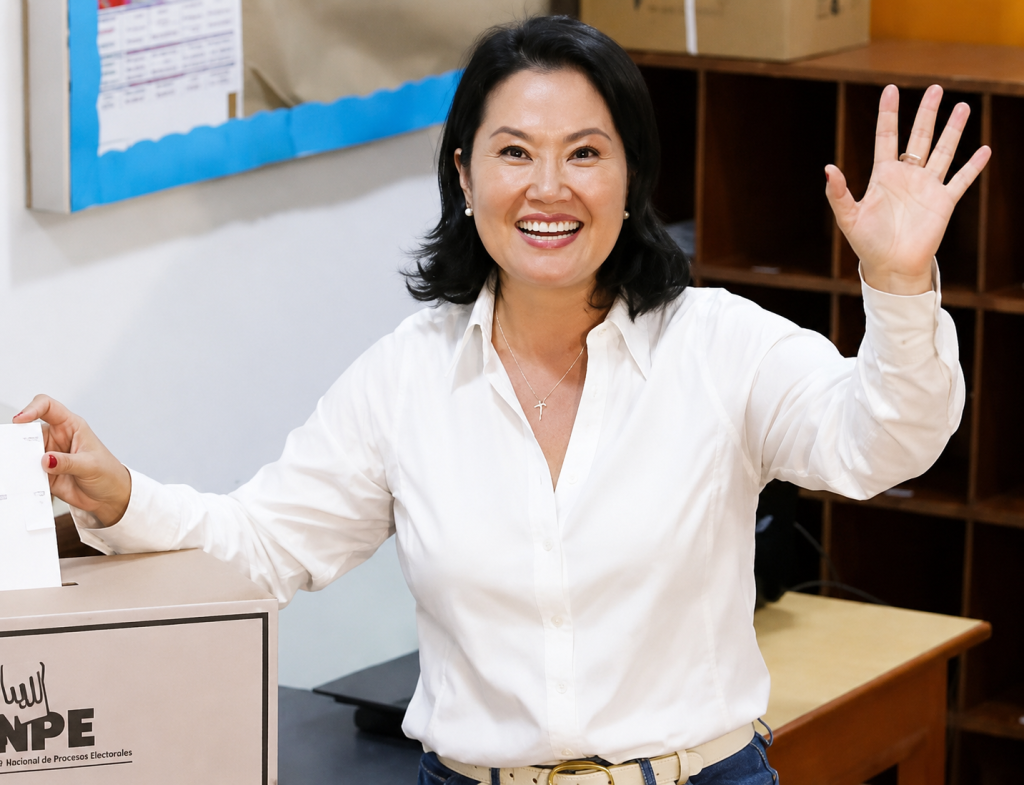
Lima, July 1, 2026 — After a particularly close presidential election, Keiko Fujimori has won Peru’s presidency and is preparing to lead a country deeply affected by political divisions, institutional crises, and social tensions. In her first speech following the announcement of her victory, the conservative leader promised to turn the page on past conflicts by calling for “reconciliation” and “unity” among all Peruvians.
Keiko Fujimori’s victory comes after a highly contested election against her left-wing opponent. The final result was decided by a very narrow margin, once again highlighting the strong political polarization that continues to shape the country. The candidate from Fuerza Popular successfully attracted a significant portion of voters by focusing her campaign on security, economic stability, and strengthening state authority.
This election represents a historic moment for Keiko Fujimori, who had already attempted several times to reach the presidency. After several electoral defeats, she has finally achieved her main political ambition in a context where many Peruvians are calling for change after years of instability.
However, her rise to power remains highly controversial. Keiko Fujimori is the daughter of former president Alberto Fujimori, whose government in the 1990s continues to deeply divide Peruvian society. Her supporters highlight the achievements of that period, particularly the fight against inflation and the defeat of the armed movement Shining Path. Her opponents, however, continue to point to accusations of authoritarianism, corruption, and human rights violations linked to his rule.
In her victory speech, Keiko Fujimori sought to address these concerns by promising to become the president of all Peruvians, including those who voted against her. She emphasized the need to move beyond ideological divisions and rebuild trust between citizens and public institutions.
“Reconciliation” and “national unity” have become the central themes of her first statements as president-elect. However, she will now have to transform these promises into concrete actions in a country where political tensions remain strong. Her first major challenge will be bringing together a population divided between her supporters, who see her as a figure capable of restoring stability, and her opponents, who fear a return to some of the practices associated with the past.
One of the main priorities of her administration will be tackling insecurity. Crime, urban violence, and the growth of criminal networks have become major concerns for many Peruvians. Keiko Fujimori has promised a tougher security policy aimed at strengthening public safety and restoring citizens’ sense of protection.
On the economic front, her government will also face major challenges. Despite its significant natural resources and economic potential, Peru continues to struggle with persistent inequalities, particularly between major cities and rural areas. Job creation, investment support, and a fairer distribution of wealth will be key issues for her administration.
The new president will also have to operate within a fragmented political landscape. In recent years, Peru has experienced repeated government crises, including conflicts between the executive branch and Congress, multiple leadership changes, and growing public distrust toward political leaders. Restoring confidence in democratic institutions will therefore be one of the biggest challenges of her presidency.
At the regional level, Keiko Fujimori’s election reflects a broader trend in Latin America, where conservative political movements have regained influence amid concerns over security, economic conditions, and governance. Her administration will be closely watched, given the historical significance of the Fujimori name in Peruvian politics.
Keiko Fujimori will officially take office on July 28, 2026, Peru’s Independence Day. She will then face a complex mission: meeting the expectations of her supporters while convincing a large part of the population that she can truly represent the national unity she has promised.
Her political success will now depend on her ability to overcome past divisions and build a new chapter for Peru.