
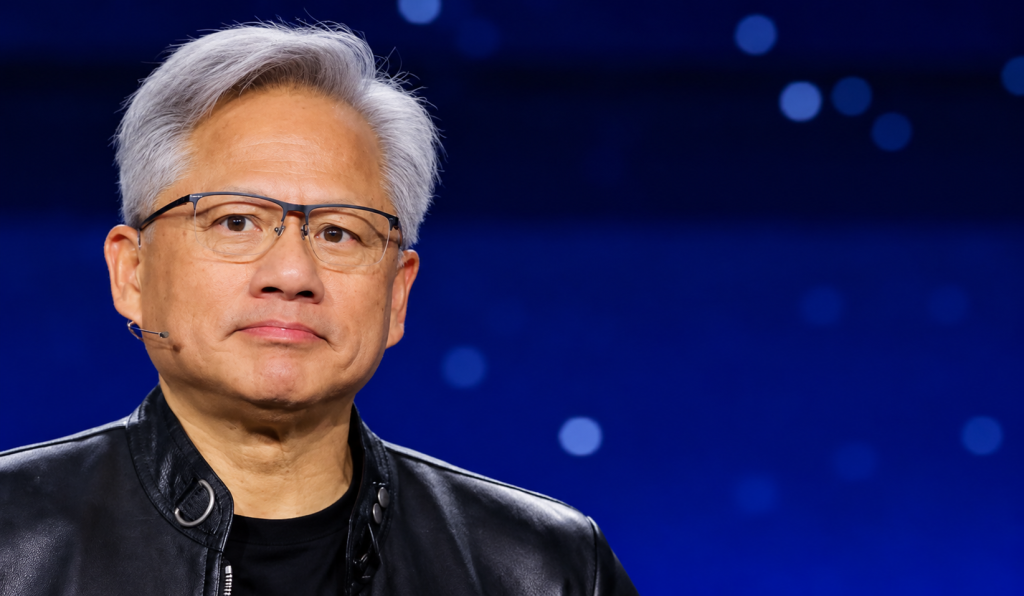
At 63, Jensen Huang has profoundly transformed Nvidia throughout his 33 years at the helm. Initially focused on designing graphics processing units (GPUs) primarily for the video game industry, the company gradually established itself as a key supplier of chips used to train and operate artificial intelligence systems. Its graphics processors, particularly those designed for data centres, are now at the heart of the infrastructure developed by major technology companies to meet the rapidly growing demand for AI. This transformation has helped Nvidia become one of the world’s most valuable companies, with an estimated market capitalisation of approximately $4 trillion.
Jensen Huang’s decision comes following several media revelations that have weakened his position. The executive reportedly acknowledged having an extramarital relationship with Alice Huang, a Chinese businesswoman suspected by US intelligence agencies of having links to Beijing’s intelligence services. The case has raised concerns about potential foreign influence operations and possible risks to the security of Nvidia’s strategic information. US authorities are particularly interested in the circumstances surrounding the relationship and its potential implications for the chipmaker’s operations.
A second alleged romantic relationship involving Kimberly Powell, Nvidia’s vice president in charge of its healthcare division, has also been reported by the American press. These revelations have intensified questions about the CEO’s conduct and the company’s corporate governance standards. In response, the board of directors had launched an independent investigation to examine the circumstances surrounding the relationships attributed to Jensen Huang and assess any potential risks to the company. However, these allegations and suspicions must be distinguished from officially established facts.
To ensure business continuity, Nvidia has appointed Colette Kress, previously the company’s executive vice president and chief financial officer, as interim chief executive officer. Having joined Nvidia in September 2013, she has played an important role in the company’s financial management and expansion. She will also retain her financial responsibilities during this transition period. The board of directors has additionally announced the launch of a recruitment process to identify a permanent successor, considering both internal and external candidates. Harvey C. Jones has been appointed as the first chairman of the board as part of this restructuring.
The leadership change immediately attracted the attention of financial markets. Before the announcement, reports suggesting that Jensen Huang might step down had already triggered a significant decline in Nvidia’s share price, which fell by more than 8% in after-hours trading on Wall Street. This reaction reflects investors’ concerns about the uncertainty surrounding the succession of a leader widely regarded as one of the most influential figures in the artificial intelligence revolution. His influence extended far beyond the company’s daily operations: he also played a central role in business relationships with major technology groups, industrial partnerships, and international discussions about the future of AI.
Jensen Huang’s departure therefore represents a strategic turning point for Nvidia, whose growth has been closely associated with his vision and leadership. Beyond the change in management, the company will need to maintain the confidence of its investors, partners, and major customers while preserving its technological advantage in an increasingly competitive market, particularly against AMD and other semiconductor manufacturers. The transition also comes just days before the publication of the company’s quarterly financial results, scheduled for 17 November 2026, an event closely watched by financial markets.
This new chapter consequently opens a period of uncertainty for the American technology giant. Colette Kress and the board of directors’ ability to ensure the company’s stability will be crucial to maintaining Nvidia’s leading position in the artificial intelligence industry. The main challenge will now be to demonstrate that the group’s technological and commercial strength can continue beyond the leadership of its founder.
