
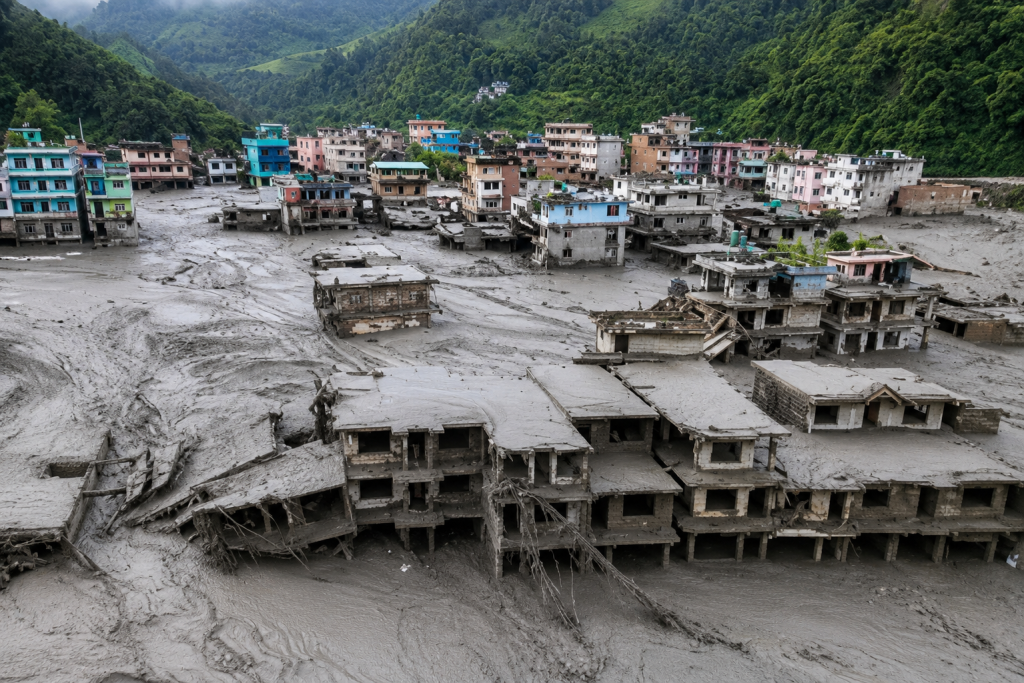
A devastating natural disaster struck the Himalayan region between Nepal and Tibet on August 26, 2026, when catastrophic flash floods swept through valleys along the Nepal-China border. The disaster caused extensive loss of life, destroyed homes and infrastructure, and left hundreds of people missing. Rescue operations remain underway as authorities attempt to reach isolated communities and assess the full extent of the damage.
The latest scientific findings are providing a clearer explanation of what triggered the disaster. Initial reports suggested that an earthquake may have caused a landslide, but subsequent geological and satellite analyses indicate that the event was primarily linked to the collapse of a large section of glacier and an associated ice-rock avalanche. The collapse generated a powerful mass of ice, rocks, sediment and water that rapidly entered the river system and transformed into an exceptionally destructive flash flood.
The event began in the high Himalayas near the Nepal-Tibet border. A huge section of ice and rock detached from the mountain slopes and plunged downward, producing a seismic signal that was initially interpreted as an earthquake. The United States Geological Survey later determined that the tremor, recorded at magnitude 5.2, was caused by the collapse of ice and rock rather than by a conventional earthquake. Satellite observations indicated that an enormous mass of ice had fallen approximately 1.2 kilometres vertically.
The resulting debris entered the Lhende Khola river system and generated an exceptionally rapid surge of water, mud, rocks and ice. The flood then propagated downstream through the Bhote Koshi and Trishuli river systems, devastating communities located along the valleys. The force of the water and debris was powerful enough to destroy bridges, roads, buildings and electricity infrastructure within a very short period of time.
The human toll has been particularly severe. By August 27, several hundred people had been confirmed dead, while more than 1,400 people were reported missing across Nepal and the Tibetan region of China. Among those missing are numerous foreign nationals, including tourists, trekkers and pilgrims who were travelling through one of the Himalayas’ most popular mountain corridors. The final toll could increase as rescue teams gain access to areas that remain cut off.
The destruction of infrastructure has made rescue operations extremely difficult. Dozens of bridges and around 40 kilometres of roads were damaged or destroyed, leaving several communities inaccessible by land. Electricity and communications infrastructure were also severely affected. Nepalese and Chinese authorities have therefore relied heavily on helicopters and other emergency resources to evacuate survivors, transport rescue teams and deliver essential supplies.
The disaster has also affected important economic and strategic infrastructure. Several hydropower facilities in the affected mountainous region were damaged, while the Gyirong border crossing between Nepal and Tibet was struck by the powerful flow of mud and debris. The destruction of roads and border infrastructure could have significant consequences for trade, transportation and local economic activity in the region.
Another major concern is the possibility of additional flooding. The enormous quantity of debris deposited by the landslide and glacier collapse has altered parts of the river system and created conditions that could lead to secondary flooding. Authorities have therefore maintained a high level of vigilance and continued monitoring rivers, unstable slopes and newly formed bodies of water.
The catastrophe is also raising broader questions about the increasing instability of the Himalayan environment. The Himalayas are experiencing rapid changes in glaciers, mountain slopes and water systems. Rising temperatures are accelerating glacier retreat and altering the physical conditions that contribute to the stability of ice and rock formations. Experts caution, however, that climate change should not automatically be considered the sole cause of this particular collapse. The precise combination of geological, climatic and glacial factors responsible for the event remains under investigation.
The tragedy illustrates the complexity of disasters in high-mountain environments. A single collapse can trigger a chain reaction involving ice, rocks, water and sediment, producing a destructive flood that can travel rapidly through narrow valleys. Communities located far downstream may therefore have only minutes to react, particularly when early-warning systems are limited or communications are disrupted.
Beyond the immediate humanitarian emergency, the disaster is likely to intensify calls for stronger monitoring of Himalayan glaciers and unstable mountain slopes. Improved satellite surveillance, early-warning systems, emergency evacuation plans and cross-border cooperation could play an increasingly important role in protecting communities and visitors in these remote regions.
The Nepal-Tibet catastrophe ultimately demonstrates how interconnected the natural systems of the Himalayas are. A landslide and glacier collapse in a remote high-altitude area rapidly developed into a major humanitarian disaster hundreds of kilometres downstream. As rescue operations continue and scientists investigate the precise causes, the tragedy serves as a stark reminder of the growing risks faced by populations living in one of the world’s most fragile and rapidly changing mountain environments.