
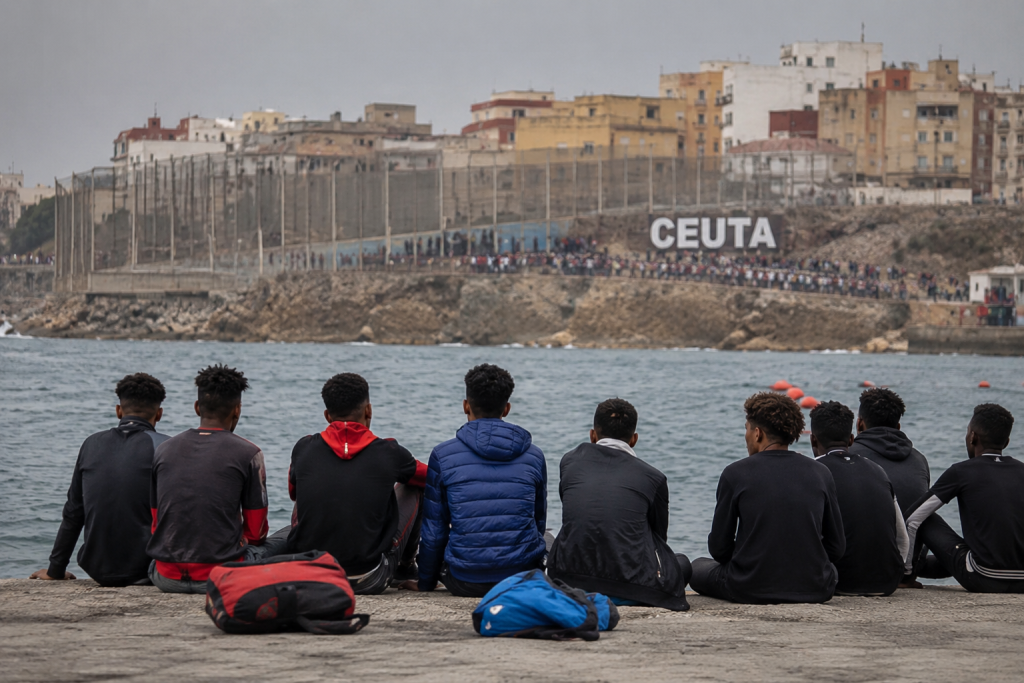
The migration crisis affecting the Spanish enclave of Ceuta remains a major concern. Nearly a week after the large-scale arrival of migrants from Morocco, around 1,100 unaccompanied minors are still staying in the enclave, placing unprecedented pressure on local reception facilities.
Local authorities report that shelters for unaccompanied children are operating far beyond their intended capacity. Officials say the reception system has become severely overcrowded, making it increasingly difficult to provide adequate accommodation, healthcare, education, and social support for the young migrants. In response, Ceuta’s regional president, Juan Jesús Vivas, has renewed his appeal for solidarity from Spain’s other autonomous communities, urging them to share responsibility for hosting the minors.
Unlike adult migrants, who may in many cases be returned to Morocco under existing bilateral agreements and Spanish immigration laws, unaccompanied minors are protected under national and international child protection regulations. Spanish authorities are therefore legally required to provide them with shelter, medical care, legal assistance, and social services until a long-term solution can be found.
The Spanish government is now seeking to accelerate the relocation of these minors to other regions across the country in order to ease the burden on Ceuta. The initiative relies on provisions introduced under Spain’s 2025 migration policy reform, which allows the redistribution of unaccompanied minors when a territory’s reception capacity is exceeded. However, the plan has sparked political controversy, with several autonomous communities governed by conservative or far-right parties opposing the mandatory relocation system.
The current situation follows an exceptional surge in migrant arrivals at the border between Morocco and Ceuta. Within just a few days, tens of thousands of people crossed into the Spanish enclave by land or sea. While many adult migrants have already returned voluntarily or been sent back to Morocco, thousands remain in Ceuta, including a significant number of unaccompanied children.
Beyond the immediate humanitarian challenge, the crisis has reignited debate over European migration policy and the relationship between Madrid and Rabat. Spanish authorities continue to stress the importance of strengthening cooperation with Morocco to combat human trafficking networks and prevent future mass crossings. At the same time, humanitarian organizations are calling on governments to prioritize the protection of children and uphold the fundamental rights of migrants.
As reception facilities continue to operate under intense pressure, Ceuta remains at the center of Spain’s migration debate. The coming days will be crucial in organizing the relocation of unaccompanied minors, preventing the humanitarian situation from worsening, and balancing border management with international cooperation and child protection obligations.