
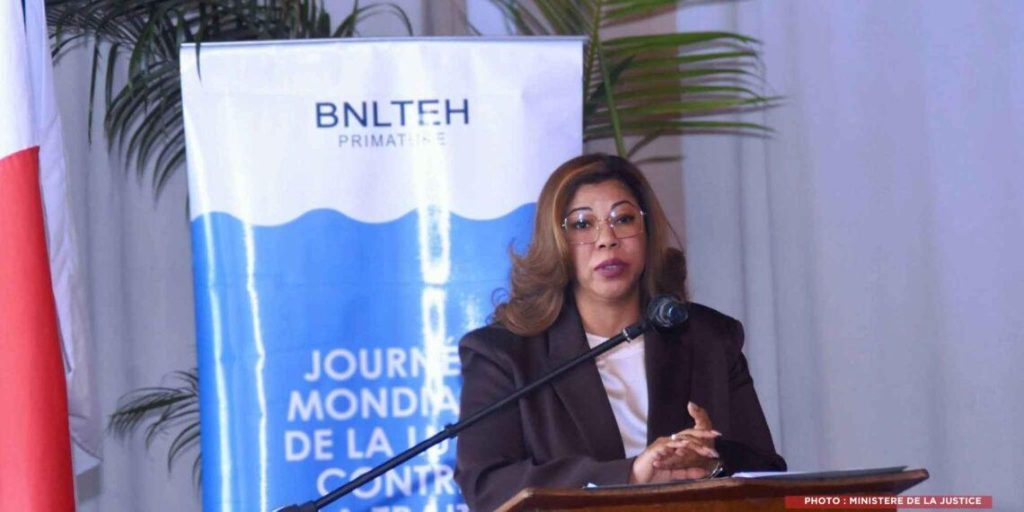
Madagascar has reaffirmed its determination to combat human trafficking and scamming networks as authorities face the emergence of new forms of exploitation linked to online criminal activities. The issue was at the center of events held on July 30 to mark World Day Against Trafficking in Persons. The renewed commitment comes as Madagascar continues to dismantle fraudulent call centers operating within the country, while international partners are paying increasing attention to the scale and nature of the phenomenon.
The fight against scamming is no longer solely a matter of cybercrime or financial fraud. It also raises serious human trafficking concerns when people are recruited, transported or kept in exploitative conditions to carry out fraudulent activities. Some victims may be lured by false promises of employment before finding themselves forced to work for criminal networks. This makes identifying victims particularly challenging, as they may initially be treated as accomplices even though they are themselves being exploited.
Justice Minister Fanirisoa Ernaivo highlighted this challenge during events dedicated to combating human trafficking. According to the minister, Madagascar’s current legal framework does not yet explicitly address the exploitation of people for the purpose of committing criminal or unlawful activities. This legal gap can complicate the classification of individuals arrested during operations against scamming networks. Some of those detained could therefore qualify as trafficking victims rather than automatically being considered people who voluntarily participated in fraudulent activities.
In response to the evolution of criminal practices, the government intends to adapt the country’s legislation. The Justice Minister announced that a bill aimed in particular at better recognizing this form of exploitation is expected to be submitted to Parliament during the next parliamentary session. The objective is to strengthen the legal tools available to authorities to identify and protect victims while ensuring more effective prosecution of those who organize or profit from these networks.
This legislative development is particularly important given that operations carried out in Madagascar have already led to the arrest of hundreds of people suspected of being connected to scamming networks. Some have been placed in detention pending trial, while others have been repatriated to their countries of origin. A significant proportion of those involved are reportedly from Asian countries, highlighting the international nature of these networks and the need for cooperation that extends beyond Madagascar’s borders.
The way these networks operate makes investigations particularly complex. The people working inside call centers are not necessarily the individuals organizing the operations or benefiting from the proceeds generated by the scams. The masterminds may be located in other countries, while the infrastructure used to conduct fraudulent activities is based in Madagascar. Authorities therefore need to establish the responsibilities of each individual, identify the organizers and determine which people were forced or manipulated into participating in criminal activities.
The transnational nature of the phenomenon is therefore one of the main challenges facing Madagascar. Combating these networks requires information-sharing between police forces and judicial authorities, as well as international cooperation to prosecute individuals located outside the country. Dismantling scamming centers cannot therefore be limited to arresting people found on the premises. It must also help investigators trace the networks, identify those behind them and track the financial flows generated by fraudulent activities.
The United States is closely monitoring the issue. Washington has expressed concerns about the presence of fraudulent call centers in Madagascar, while acknowledging the efforts undertaken by Malagasy authorities to tackle these networks. During events marking World Day Against Trafficking in Persons, U.S. Chargé d’Affaires in Madagascar Melanie Higgins reaffirmed the United States’ support for initiatives aimed at strengthening the fight against human trafficking and protecting victims.
This international cooperation also includes support for strengthening the capacity of Malagasy authorities. The United States supports the work of the United Nations Office on Drugs and Crime (UNODC), particularly in training law enforcement officers responsible for investigating human trafficking cases. Malagasy officers have received training designed to improve their ability to identify victims, conduct investigations, gather evidence and prosecute alleged perpetrators.
For Madagascar, the challenge now lies in adapting its national response to the changing methods used by criminal networks. Human trafficking is no longer limited to traditionally recognized forms of exploitation. The use of digital technologies allows criminal organizations to develop new recruitment and exploitation methods, particularly in connection with online scams. This transformation requires authorities to strengthen their judicial, law enforcement and technological capabilities simultaneously.
Victim protection is also a key component of this strategy. People exploited within scamming networks may face pressure, threats or manipulation that make it difficult to identify them as victims. An exclusively punitive approach could therefore fail to distinguish between those who run the networks and those who were recruited and forced to participate in fraudulent activities. The future reform of the legal framework will consequently need to provide greater recognition and protection for people who are victims of such exploitation.
Madagascar’s renewed commitment therefore reflects its determination to address a phenomenon that is simultaneously criminal, digital and transnational. Dismantling scamming networks, identifying victims, prosecuting masterminds, updating legislation and strengthening international cooperation are now interconnected priorities. As Malagasy authorities prepare to strengthen the legal framework, the effectiveness of this strategy will also depend on institutions’ ability to detect cases of exploitation more effectively and provide genuine protection to people who fall victim to these networks.