
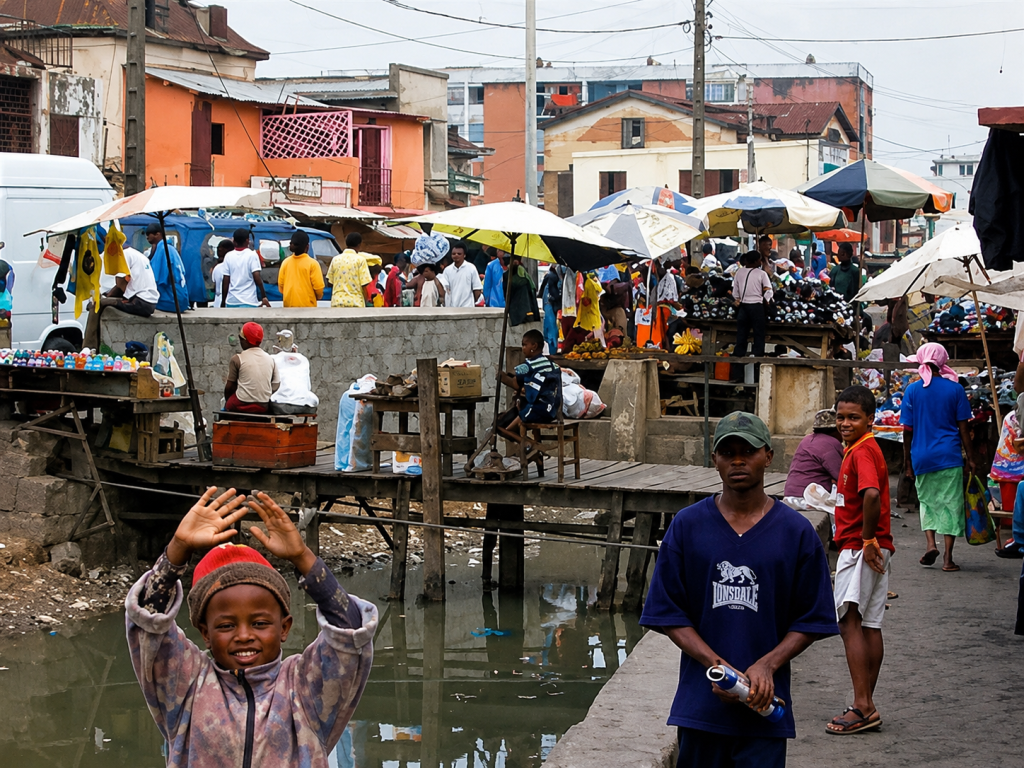
Madagascar’s Ministry of Population and Solidarity has reported encouraging progress in its efforts to support homeless people in Antananarivo. Thanks to a new awareness and outreach strategy centered on dialogue, trust-building, and voluntary participation, the number of homeless individuals staying overnight at the Madcap Center in Isotry has increased from around 200 to more than 460 people per night, more than doubling within a few weeks. The initiative marks a significant shift in the country’s approach to addressing homelessness and social exclusion.
Since June, the ministry has moved away from systematically transporting homeless individuals to shelters. Instead, outreach teams now spend time engaging directly with people living on the streets, explaining the services available, the conditions within the shelters, and the opportunities for social reintegration. The goal is to encourage individuals to seek assistance voluntarily, fostering a stronger sense of trust and ensuring that support is accepted willingly rather than imposed. According to the authorities, this people-centered approach has already produced highly positive results only one month after its implementation.
Dina Michel Ramananirina, Regional Director of Population and Solidarity for Analamanga, explained that the sharp increase in admissions demonstrates growing confidence in the shelter system. The Madcap Center now accommodates more than 460 people every night, highlighting the effectiveness of the awareness campaigns carried out among vulnerable populations across the capital. Officials believe that better communication and continuous field outreach have encouraged more homeless individuals to seek protection and support.
The significant rise in the number of beneficiaries has also required the government to reorganize its shelter network. To prevent overcrowding at the Madcap Center, more than 150 homeless people, representing approximately 40 households, have recently been transferred to the Seba Center, also located in Isotry. The selected families were chosen based on criteria such as good behavior, hygiene, and respect for community rules. This transfer creates additional capacity at the Madcap Center while allowing residents at Seba to receive more personalized support as they work toward rebuilding their lives.
The Seba Center offers far more than temporary accommodation. It provides a comprehensive social reintegration program designed to help residents regain their independence. Families receive essential household items, including mattresses, bedding, and basic necessities, while social workers provide ongoing guidance and support. Children participate in educational and recreational activities, and adults are encouraged to attend life-skills training, vocational programs, and employment support initiatives aimed at helping them secure stable sources of income. The overall objective is to equip beneficiaries with the tools they need to reintegrate into society and achieve long-term self-sufficiency.
Life at the Seba Center is governed by a strict code of conduct intended to promote discipline and harmonious community living. Alcohol consumption, violence, theft, and violations of the 9:00 p.m. curfew are prohibited. Residents who repeatedly fail to comply with these rules may be transferred back to their previous shelter. Authorities consider this framework an essential component of the reintegration process, helping beneficiaries adapt to a structured environment while preparing for independent living.
Shelter occupancy also varies depending on the season. During Madagascar’s rainy season, the facilities generally operate at full capacity as living conditions on the streets become increasingly difficult. Conversely, during the cooler winter months, some residents temporarily return to their home villages to participate in traditional family ceremonies, such as famadihana (the turning of the bones ceremony) or circumcision celebrations, while others leave to take part in agricultural activities. These seasonal movements result in a temporary decline in shelter occupancy.
Through this renewed strategy, the Malagasy government aims to move beyond emergency assistance and establish a more inclusive and sustainable social protection system. By prioritizing voluntary participation, individualized support, and pathways toward economic independence, the authorities hope to reduce homelessness in Antananarivo over the long term and facilitate the successful reintegration of vulnerable individuals into society. The initiative reflects a broader commitment to developing social policies that emphasize dignity, inclusion, and lasting social recovery.