
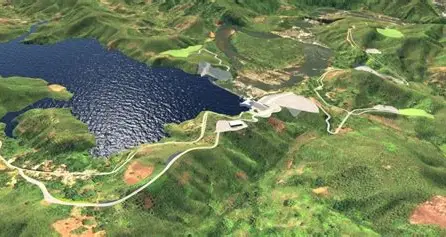
The development of the Volobe II hydropower plant, one of Madagascar’s most strategic energy infrastructure projects, will face a further delay. Negotiations between the Malagasy government and the project’s stakeholders have been extended until June 2027, postponing once again the completion of the agreements required to move the project into its construction phase. The extension reflects the complexity of discussions surrounding a project expected to play a key role in transforming the country’s energy sector.
The negotiations primarily focus on the terms of the concession agreement and the tariff at which the electricity generated by the plant will be sold to JIRAMA, Madagascar’s national electricity and water utility. These issues are crucial to ensuring the project’s long-term financial sustainability while maintaining electricity prices at an affordable level for both the utility and consumers. Discussions also cover the allocation of financial risks among the various stakeholders and the guarantees needed to secure international financing.
Located on the Ivondro River in the Atsinanana Region, near the port city of Toamasina, the Volobe II hydropower plant is expected to have an installed capacity of approximately 120 MW and generate around 750 GWh of electricity annually. This additional capacity would significantly strengthen Madagascar’s interconnected power grid while reducing the country’s dependence on expensive diesel-powered thermal plants, which remain a major source of electricity generation and greenhouse gas emissions.
The project is being developed under a public-private partnership by the Compagnie Générale d’Hydroélectricité de Volobe (CGHV), with the support of several international partners. It is considered a cornerstone of Madagascar’s national energy strategy, which aims to improve electricity access across the country. Despite recent progress, Madagascar continues to have one of the lowest electrification rates in Africa, making large-scale renewable energy projects essential to meeting growing energy demand.
Although the final agreements have not yet been concluded, preparatory work is expected to continue. The government plans to finance key access infrastructure, including the construction of a nearly 45-kilometer access road and a bridge linking National Road 2 to the future dam site. These developments are intended to facilitate construction activities once the contractual negotiations are successfully completed.
The repeated postponements highlight the challenges associated with delivering major infrastructure projects in Madagascar. Negotiations over electricity pricing, financing arrangements, and investor guarantees have proven particularly complex. Nevertheless, government officials remain committed to reaching a balanced agreement that ensures the project’s economic viability while limiting the financial burden on JIRAMA.
Once operational, the Volobe II hydropower plant is expected to become one of Madagascar’s largest sources of renewable electricity. By increasing the share of hydropower in the national energy mix, the project would help reduce fuel imports used for electricity generation, lower long-term production costs, improve the reliability of the national power grid, and support the country’s economic and industrial development. Beyond its energy benefits, Volobe II is also expected to strengthen Madagascar’s attractiveness to investors by providing a more stable and sustainable electricity supply for businesses and households alike.