
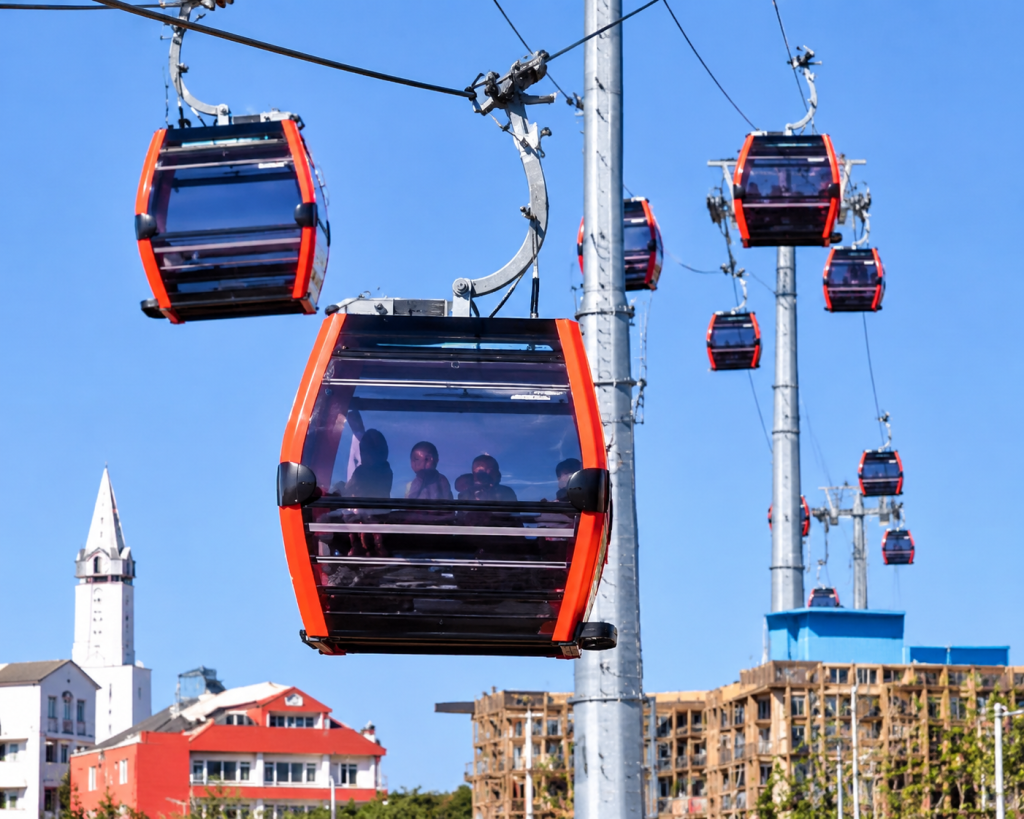
The Malagasy government is considering a new strategy to resume operations of the Antananarivo cable car system, which has been out of service since September 2025. To bring this urban transport infrastructure back into operation, the authorities intend to prioritize a concession-based arrangement that would allow private investors to finance its rehabilitation and take responsibility for its operation. This approach was announced by Herizo Ramanambola Andrianavalona, Minister of Transport and Meteorology, during an appearance on the national public broadcasting channel on October 30, 2026.
Faced with this situation, the government believes that two options are available: leave the infrastructure unused in its current condition or undertake the necessary work to restore it to service. Keeping the system closed for an extended period could lead to the gradual deterioration of its equipment and jeopardize the investments already made. To prevent such losses, the Ministry of Transport is therefore seeking to attract private operators capable of taking over the project.
A concession agreement is currently the main option being considered by the authorities. Under the proposed arrangement, the selected private investor would be responsible for mobilizing its own financial resources to rehabilitate the facilities and subsequently manage the cable car system. In return, the investor would be required to pay a concession fee to the State. This approach would enable the government to limit additional public expenditure while generating revenue through the concession. According to the minister, no new direct public investment is planned for the project’s relaunch.
However, the implementation of this initiative will depend on the interest shown by private investors. The government has indicated that it is open to proposals from operators willing to participate in the rehabilitation and management of the network. If no investors are prepared to commit the necessary financial resources, the cable car system could remain out of service, despite the substantial amounts already invested in its construction.
It is worth recalling that the Antananarivo cable car project involved an estimated investment of USD 152 million. Initially designed to improve urban mobility in the capital, the system was intended to serve several strategic areas, including Anosy, Ivandry, Ambatobe and Ankatso. The orange line, connecting Anosy to Ivandry, was inaugurated shortly before the Southern African Development Community (SADC) summit in August 2025. A state-owned company had been assigned responsibility for its operation.
However, the events of September 25, 2025, led to the suspension of operations. Several facilities were damaged, while some stations were looted, particularly those in Anosy, Ankorondrano and Ivandry. Since then, the cable cars have remained out of operation, leaving the infrastructure unused.
Beyond the question of rehabilitation, the potential relaunch of the cable car system represents a significant issue for urban mobility in Antananarivo. The capital regularly faces severe traffic congestion, making daily journeys increasingly difficult for residents. Restoring the cable car service could therefore help diversify transportation options and reduce pressure on the city’s road network.
The government’s new approach marks a shift in the proposed management model for the project. The key question now is whether private investors will be willing to finance the rehabilitation and operation of the system, and under what conditions the cable car could once again become part of the capital’s urban transport network.
