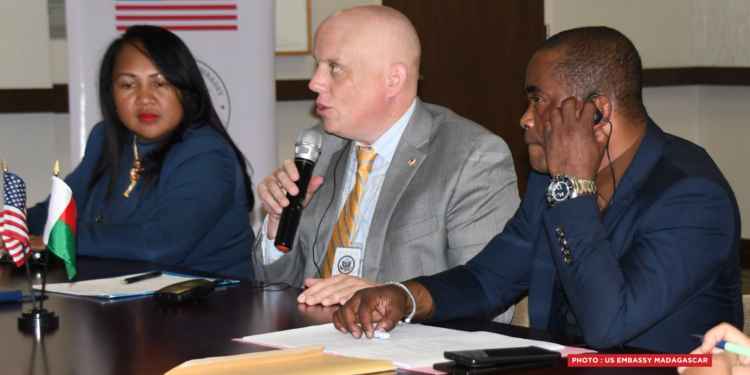
Madagascar and the United States are strengthening the monitoring of their health cooperation program. The joint steering committee overseeing the implementation of the memorandum of understanding between the two countries has announced plans to hold quarterly review meetings. This new monitoring mechanism is intended to regularly assess progress, identify challenges, and determine which areas require additional attention during the following period.
The first meeting of the steering committee was held on Friday, several months after the memorandum of understanding was signed on December 22, 2025. The meeting provided Malagasy and American officials with an opportunity to review the activities already carried out and examine areas where further improvements are still needed. The decision to conduct quarterly assessments is therefore intended to establish a more consistent and structured approach to monitoring the partnership.
The program covers six strategic areas of health cooperation, in which both sides say progress has already been made. However, Madagascar’s Ministry of Public Health has stressed the need to maintain efforts to strengthen the national health system and ensure that the remaining priorities are effectively implemented.
The memorandum of understanding is backed by significant financial commitments. The partnership is expected to run for five years, with a total value of $175 million. The United States is expected to provide more than $134 million, while the Malagasy government is set to contribute approximately $41 million. This financial framework reflects the importance attached to health cooperation between the two countries and is intended to support initiatives aimed at improving Madagascar’s healthcare system.
The steering committee is one of the key governance mechanisms established under the agreement. It brings together Malagasy and American officials responsible for coordinating the different components of the partnership. Its role goes beyond simply reviewing results. It is also expected to monitor the implementation of commitments, identify potential delays and help improve the use of the resources allocated to the program.
The monitoring process is also linked to performance objectives jointly established by the two countries. For the United States, continued support is expected to be associated with measurable results and compliance with agreed performance criteria. Quarterly meetings should therefore provide an opportunity to assess progress toward the program’s objectives and make timely adjustments whenever shortcomings are identified.
The cooperation is also part of the United States’ “America First Global Health” strategy, which places greater emphasis on strengthening national health systems and building local capacity. The approach aims to help partner countries develop stronger capabilities to prevent, detect and respond to health threats, while gradually reducing their dependence on external assistance.
For Madagascar, the partnership is particularly important in the areas of disease prevention and epidemic preparedness. Cooperation focuses, among other priorities, on the country’s ability to detect and contain diseases such as malaria and polio, as well as other emerging health threats. Strengthening disease surveillance and response capabilities could help reduce the impact of outbreaks in Madagascar while also limiting the risk of international spread linked to travel and cross-border exchanges.
Beyond financial support, the quarterly review mechanism demonstrates a shared commitment to accountability, transparency and effectiveness. Future meetings of the steering committee will be important in determining whether the financial and technical resources provided are translating into concrete improvements on the ground and in identifying measures needed to address any remaining gaps.
With the partnership scheduled to continue for five years, regular monitoring will be crucial to ensuring that the financial and technical resources mobilized by both countries contribute to the long-term strengthening of Madagascar’s health system.