
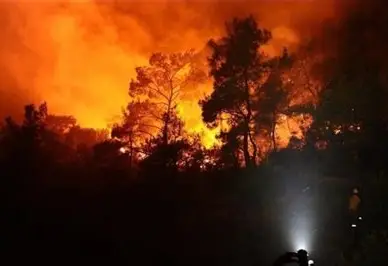
Japan is currently facing a serious environmental emergency as rapidly spreading forest fires have forced the evacuation of approximately 2,500 residents. According to reports dated April 24, 2026, the fires broke out in multiple forested areas and have continued to intensify, driven by strong winds and dry weather conditions that are making containment efforts increasingly difficult.
Local authorities have issued mandatory evacuation orders in several affected zones to ensure the safety of residents living near the fire lines. Temporary shelters have been set up to accommodate displaced families, while emergency services continue to expand evacuation operations in areas considered at high risk. Officials have urged residents to strictly follow safety instructions and remain alert, as the situation could evolve quickly depending on weather conditions and fire behavior.
Firefighters are working intensively on the ground, supported by aerial firefighting units, including helicopters equipped to drop water over the most critical zones. Specialized rescue teams are also operating in difficult terrain, as many of the affected areas are located in mountainous or densely wooded regions. These geographical challenges are significantly slowing containment efforts, despite the large-scale mobilization of emergency resources.
Japan, a country frequently exposed to natural disasters such as earthquakes, tsunamis, and typhoons, is increasingly experiencing severe wildfire events. Experts point out that rising temperatures, prolonged dry periods, and changing climate patterns are contributing to a higher risk of forest fires. These conditions are not only increasing the frequency of such incidents but also their intensity and speed of spread.
In addition to the direct threat to homes and infrastructure, the fires have caused major disruptions in daily life. Several roads have been closed for safety reasons, and power outages are possible in some areas. Transportation networks may also be affected if the situation worsens. Authorities are closely monitoring air quality, as smoke from the fires can pose health risks, particularly for children, elderly people, and individuals with respiratory conditions.
At this stage, no official confirmation has been given regarding casualties or the full extent of property damage. Emergency services remain on high alert, with the main priority focused on protecting lives, completing evacuations, and bringing the fires under control as quickly as possible before conditions potentially worsen further in the coming hours.