
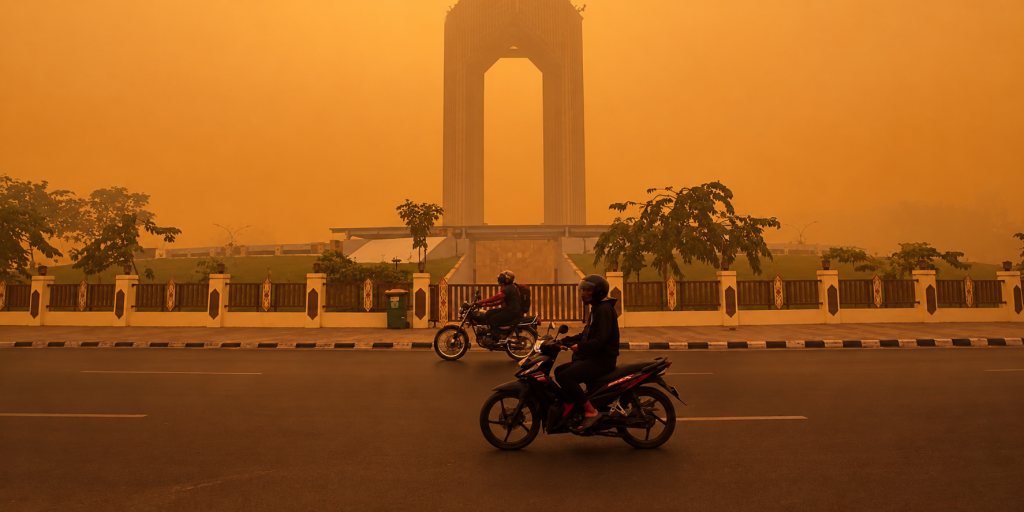
The situation also poses a major public health threat. Fine particles in the air can cause eye and throat irritation, breathing difficulties, and worsen existing respiratory and cardiovascular conditions. According to Indonesian health data reported in mid-October 2026, nearly 280,000 cases of acute respiratory infections had been recorded across seven provinces. The pollution has also led to school closures, particularly in Malaysia and Timor-Leste, as well as major disruptions to air traffic in Indonesia. In Singapore, authorities are also considering legal action against companies found responsible for the pollution caused by their activities.
The worsening fires are partly attributed to drought and the El Niño climate phenomenon, which can create conditions particularly conducive to the spread of wildfires. However, human activities also play a significant role. Land clearing through slash-and-burn practices, deforestation and the degradation of peatlands contribute to the growing number of fires. These carbon-rich soils can continue burning underground, making firefighting operations particularly difficult and prolonging the release of toxic smoke into the atmosphere.
In response to the scale of the disaster, Indonesian authorities have mobilized tens of thousands of people, including firefighters, military personnel and volunteers, alongside aircraft to combat the fires. The human toll has also risen. On October 15, four people died while fighting a fire in Bromo Tengger Semeru National Park on the island of Java, while two others suffered severe burns. On October 16, Indonesian President Prabowo Subianto expressed his willingness to accept foreign assistance, according to his foreign minister, following offers of support from neighboring countries.
The crisis has renewed diplomatic tensions across Southeast Asia, particularly between Indonesia, Malaysia and Singapore. These countries are calling for more effective regional cooperation and greater accountability for companies potentially involved in activities that contribute to the pollution. Malaysia has notably called for an emergency meeting of the Association of Southeast Asian Nations (ASEAN) to discuss the situation. Beyond immediate firefighting efforts, the disaster highlights the need to strengthen fire prevention, protect forests and peatlands, and enforce environmental regulations more strictly. Without sustainable measures and an improvement in weather conditions, air pollution could persist, worsening its health, economic and environmental consequences throughout the region.