
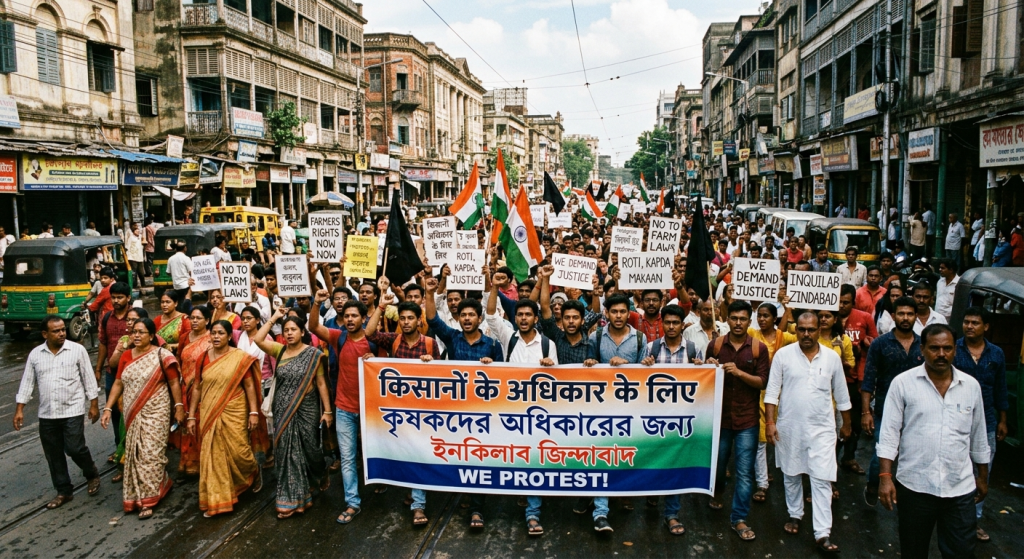
The Indian government has announced the end of several days of heightened tensions with a youth-led protest movement after agreeing to most of the demonstrators’ demands. The outcome represents one of Prime Minister Narendra Modi’s most significant political setbacks since taking office in 2014, as widespread student protests evolved into a nationwide movement calling for greater transparency, government accountability, and better opportunities for young people.
The protests were initially triggered by a major leak involving the National Eligibility cum Entrance Test (NEET), India’s highly competitive medical school entrance examination. The scandal affected nearly two million candidates and sparked outrage after allegations that exam papers had been leaked before the test. Authorities eventually canceled the results and scheduled a retest, fueling public anger among students and their families. As the demonstrations grew, protesters expanded their demands to include action against corruption, improved governance, and stronger employment prospects for India’s youth.
Under mounting public pressure, Education Minister Dharmendra Pradhan resigned, becoming only the second minister in Narendra Modi’s administration to step down over a major controversy since 2014. Protest leaders hailed the resignation as a significant victory, arguing that it demonstrated the power of peaceful civic mobilization to hold political leaders accountable.
Following a new round of negotiations between government officials and protest representatives, authorities agreed to implement several key measures. These include reforming the national examination system to strengthen its integrity, dropping legal charges against peaceful demonstrators, and providing compensation to the families of students who died by suicide in the aftermath of the examination scandal. In response, protest organizers announced the suspension of demonstrations “in good faith” while emphasizing that they would closely monitor the government’s implementation of its commitments.
The movement, known as the Cockroach Janta Party (CJP), gained national attention through its innovative use of social media, memes, and online campaigns to mobilize young people across the country. By leveraging digital platforms, organizers successfully bypassed traditional media channels and transformed a student protest into a broader political movement that resonated with millions of young Indians.
The crisis comes at a particularly sensitive time for Prime Minister Modi. Nearly half of India’s population is under the age of 25, while youth unemployment remains one of the country’s most pressing socioeconomic challenges. Political analysts believe the protests highlight growing frustration among younger generations, many of whom expected stronger economic opportunities and better governance. Opposition parties have also intensified pressure on the government by supporting the protesters’ demands and disrupting parliamentary proceedings.
Although the demonstrations have now been suspended, the movement is widely seen as a turning point in India’s political landscape. It underscores the growing influence of young citizens in shaping public policy and may inspire future civic movements focused on education, employment, transparency, and democratic accountability.