
The Bolsonaro family continues to play an important role in Brazilian politics following the first round of the presidential election held on October 4, 2026. Flávio Bolsonaro, the eldest son of former President Jair Bolsonaro, finished first with 47.03% of the vote, narrowly ahead of incumbent President Luiz Inácio Lula da Silva, who received 45.16%. The two candidates will face each other in the runoff scheduled for October 25.
Flávio Bolsonaro, 45, is a senator and the candidate of the Liberal Party (PL). His candidacy has attracted particular attention because of his family background and his father’s continuing influence over the political movement associated with him. Jair Bolsonaro, who served as president from 2019 to 2022, was declared ineligible to run for office and was sentenced to 27 years in prison in connection with the investigation into the January 8, 2023 events. Despite his legal situation, he remains an influential figure among his political supporters.
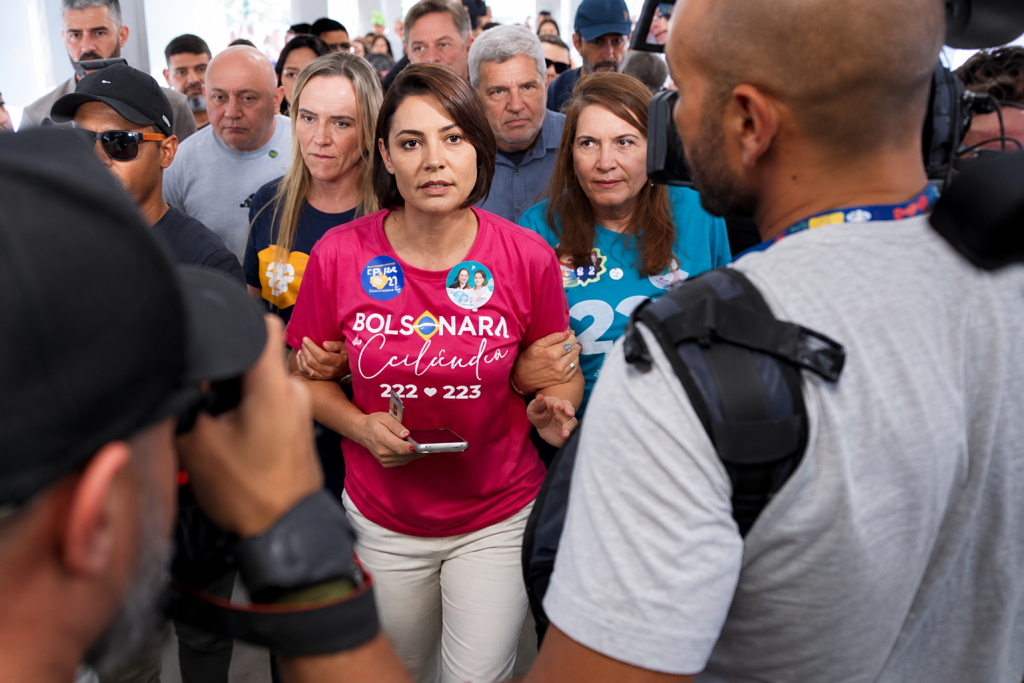
Several members of the Bolsonaro family have also secured elected positions. Michelle Bolsonaro, Jair Bolsonaro’s wife, was elected to the Senate representing the Federal District, while Carlos Bolsonaro, one of his sons, also won a Senate seat in Santa Catarina. Jair Renan Bolsonaro obtained a seat in the Chamber of Deputies, while Renato Bolsonaro, Jair Bolsonaro’s brother, was also elected. The results give the family a significant presence within Brazil’s federal institutions.
Flávio Bolsonaro’s political career has also been marked by legal proceedings and allegations that he has denied. An investigation opened by prosecutors in Rio de Janeiro examined alleged corruption, money laundering and the so-called rachadinha practice, involving the alleged return of part of parliamentary employees’ salaries. The investigation concerning approximately 6.5 million reais was annulled in 2021 on procedural grounds. More recently, Brazilian authorities have opened another investigation concerning alleged corruption and money laundering in connection with businessman Daniel Vorcaro and the Banco Master affair. Flávio Bolsonaro has denied any wrongdoing and has described the accusations as politically motivated.
The choice of Flávio Bolsonaro as the family’s presidential candidate followed several developments within the Bolsonaro political camp. Jair Bolsonaro was initially unable to participate in the 2026 election because of his legal and electoral status. His son Eduardo Bolsonaro, who had previously been considered a possible successor, moved to the United States in 2025. Flávio subsequently became the principal candidate representing the family’s political movement.
The legislative elections held at the same time as the presidential vote also produced important changes in Congress. The Liberal Party and its allies increased their representation, particularly in the Senate. Reuters reported that the Liberal Party increased its Senate seats from 15 to 28, while the broader group supporting Flávio Bolsonaro gained substantial representation in both chambers. These results could have a significant influence on the legislative environment following the presidential runoff.
The election therefore highlights the continued political importance of the Bolsonaro family in Brazil. Jair Bolsonaro remains an influential reference for his political supporters, while several members of his family now hold or seek elected office. At the same time, Flávio Bolsonaro’s campaign has been shaped by debates over his political program, the country’s economic and security policies, and the legal controversies surrounding members of his family.
The October 25 runoff between Flávio Bolsonaro and Luiz Inácio Lula da Silva will determine who becomes Brazil’s next president. Regardless of the outcome, the first round has demonstrated the continued importance of the political movement associated with Jair Bolsonaro and the significant role played by members of his family in Brazil’s current political landscape.
