
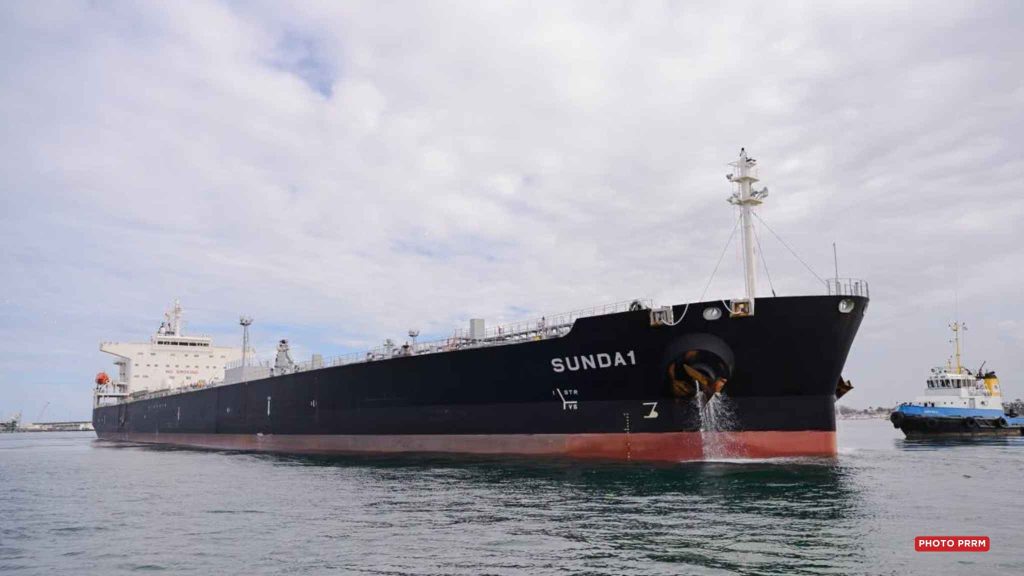
A new logistical challenge is emerging in Madagascar’s petroleum sector. The near-simultaneous arrival of two vessels carrying petroleum products at the Port of Toamasina is putting pressure on the storage and unloading capacity of the country’s main oil terminal. At the center of the situation are the Sunda One, chartered by the State and carrying 63,000 cubic meters of diesel, and the Torm Eva, a vessel scheduled as part of the regular supply program of petroleum companies grouped within the Madagascar Petroleum Group (GPM).
The situation could create significant logistical difficulties because the storage capacity at the Toamasina terminal was requisitioned by the State following a decree issued on August 4, 2026. The GPM therefore fears that the Torm Eva, although chartered as part of the private operators’ regular supply program, may not be able to unload its cargo immediately.
The situation comes as the government seeks to strengthen the availability of diesel on the domestic market. The shipment carried by the Sunda One is intended to help ensure the continuity, regularity, and security of the country’s fuel supply. The government therefore considers the operation an important component of national fuel security. However, the decision to mobilize the terminal’s storage capacity at the same time as an existing private-sector supply program has created a coordination problem between the different stakeholders.
The GPM’s main concern is the lack of prior consultation with petroleum companies. For private operators, changes to the unloading schedule and terminal management could disrupt existing stock levels. The group has warned of possible consequences for the availability of unleaded gasoline and kerosene, two products that could face supply pressures if private-sector vessels are unable to unload their cargoes within the expected timeframe.
The issue is primarily logistical, but its consequences could quickly become economic. The Toamasina oil terminal is a strategic link in Madagascar’s fuel supply chain, as imported petroleum products are received there before being transported to storage facilities and distribution networks across the country. When several vessels arrive within a short period, available storage capacity becomes a critical factor in preventing delays and disruptions.
One of the main risks identified by operators is demurrage. If a vessel cannot unload within the agreed timeframe, it may remain at the port for an extended period, generating additional charges from the shipowner. These costs can increase the overall cost of importing petroleum products. The GPM has therefore warned that reaching the terminal’s maximum available capacity could result in additional financial costs while making the management of fuel imports more difficult.
The second major risk concerns national distribution. Giving priority to the unloading of the diesel imported by the State could delay the unloading of products ordered by private petroleum companies. If such delays persist, they could gradually create pressure on the availability of certain fuels, particularly unleaded gasoline and kerosene. This does not necessarily mean that a shortage will occur, but it highlights the vulnerability of a supply system in which congestion at a major entry point can have repercussions throughout the distribution chain.
Beyond the immediate situation, the dispute highlights a more structural issue: the ability of Madagascar’s petroleum infrastructure to handle several major import operations simultaneously without disrupting existing supply programs. When storage capacity is limited, coordinating vessel arrivals, ensuring the availability of storage tanks, and organizing unloading operations become essential to maintaining market stability.
For the GPM, better coordination between the State, petroleum companies, and other stakeholders could have helped prevent the current difficulties. Prior consultation, according to the group, would have made it possible to identify solutions that could accommodate the State’s diesel shipment while preserving the supply operations already scheduled by private operators.
The petroleum companies have nevertheless indicated that they remain committed to supporting the continuity of fuel supplies to the domestic market. At the same time, they have warned that they should not be held responsible for potential consequences arising from decisions that alter an established supply system without sufficient coordination. Their position reflects the broader argument that energy security depends not only on having sufficient fuel available, but also on maintaining a predictable and well-coordinated logistics system.
The issue therefore goes beyond the management of two vessels at Toamasina. It concerns Madagascar’s energy security, the control of import costs, and the ability to maintain a regular fuel supply across the country. Prolonged vessel delays, additional demurrage costs, or disruptions to unloading schedules could, if they continue, put further pressure on the national supply chain.
The situation observed on August 12 is therefore an important warning for Madagascar’s petroleum sector. While the State is seeking to secure diesel supplies through a 63,000-cubic-meter shipment, private operators fear that the allocation of terminal capacity to the State’s operation could disrupt their own established supply programs. The immediate challenge will be to strike a balance between the State’s strategic fuel-supply objectives and the continuity of private petroleum companies’ commercial operations, ensuring that a logistical constraint at Toamasina does not develop into a broader fuel-distribution problem across Madagascar.