
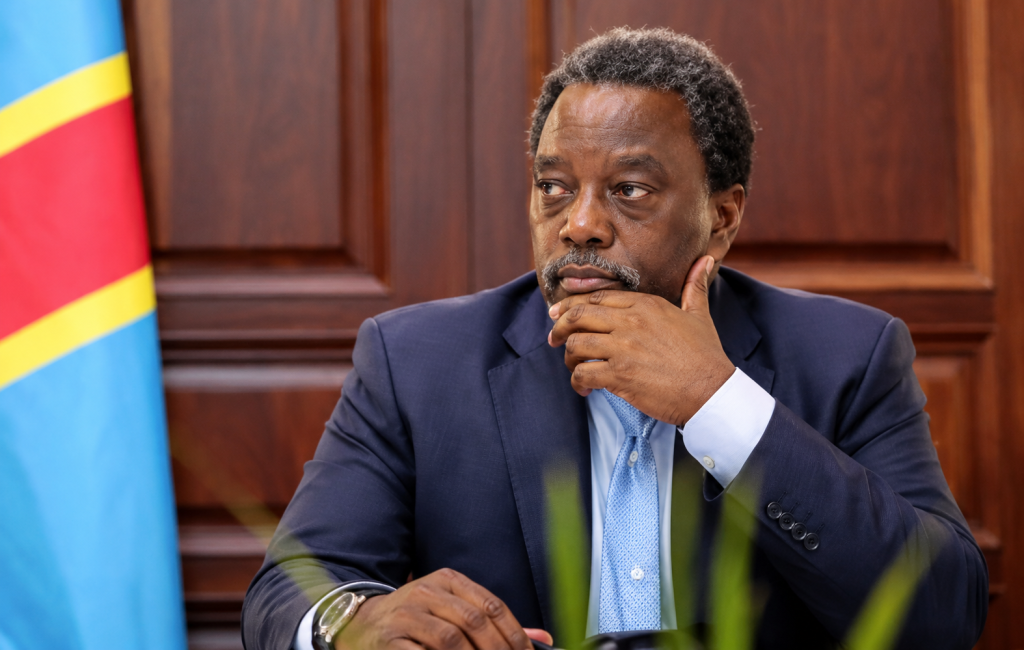
Former Democratic Republic of the Congo (DRC) president Joseph Kabila has officially taken the lead of the National Refoundation Front (FRN), a new political-military movement announced on Monday, October 12, 2026, in Goma, in the eastern part of the country. The organization brings together figures associated with the former AFC/M23 coalition, including the M23 armed group, which has been supported by Rwanda, according to several international sources. The initiative marks a new development in the conflict between the Congolese government forces and armed groups operating in eastern DRC.
The FRN replaces the former AFC/M23 coalition and aims to consolidate its resources, capabilities, and forces in opposition to President Félix Tshisekedi’s government. In its political declaration, the movement says it intends to end what it describes as tyranny, invoking Article 64 of the Congolese Constitution. This provision establishes the duty to oppose any seizure or exercise of power in violation of constitutional principles. The movement also indicates that it may pursue its objectives through various means, including the use of force.
Joseph Kabila, who served as president of the DRC from 2001 to 2019, is leading the new organization. He is joined by several prominent figures from the former coalition, including Corneille Nangaa, a former leader of the Congo River Alliance (AFC), and Bertrand Bisimwa, a leader of the M23. General Sultani Makenga, the M23’s military commander, is also reported to hold a prominent position within the movement’s military structure. This arrangement brings the former head of state closer to the rebel actors who control several strategic areas in eastern Congo.
The announcement comes amid an increasingly tense political and security situation. The M23 controls Goma and Bukavu, two major cities in eastern DRC that it captured during its offensives in January and February 2025. The region continues to experience recurring clashes, population displacement, and persistent regional tensions. Despite several diplomatic initiatives, including mediation efforts involving the United States and Qatar, attempts to establish a lasting ceasefire have not succeeded in bringing an end to the violence on the ground.
Joseph Kabila’s leadership of the FRN also raises significant legal and political questions. In September 2025, the former president was sentenced to death in absentia by a Congolese military court on charges including treason and war crimes, allegations he contests. Judicial authorities had accused him of alleged involvement in the rebellion. The conviction came amid a sharp deterioration in his relationship with Félix Tshisekedi’s government.
Politically, this new alliance could further complicate peace negotiations and deepen divisions within the Congolese political establishment. It also emerges amid debate over the country’s institutional future, as Félix Tshisekedi’s second and final constitutionally permitted term is scheduled to end in 2028, unless the constitutional framework is changed. The creation of the FRN therefore represents a significant development in the Congolese crisis, with potential consequences for both domestic political stability and relations among countries in the Great Lakes region.