
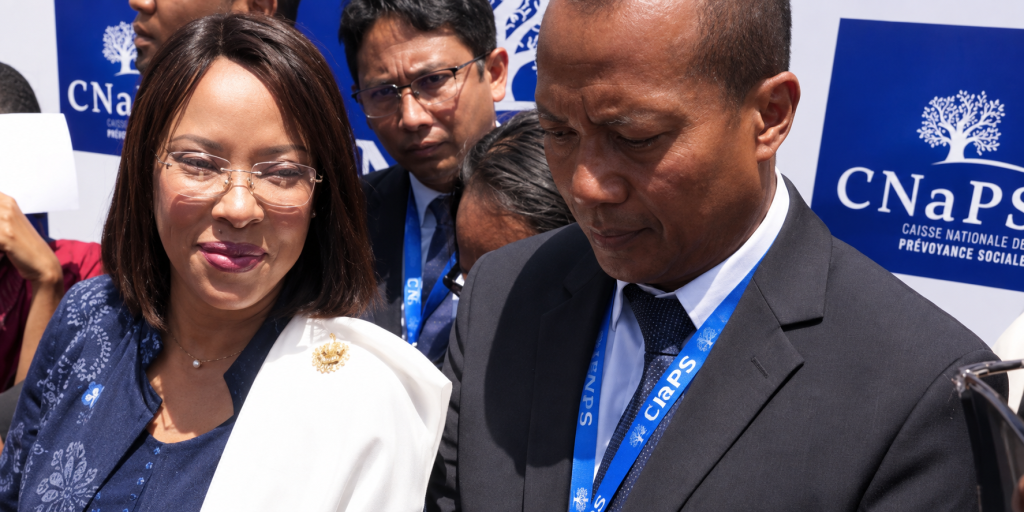
Madagascar’s National Social Security Fund (CNaPS) is preparing a major development of the country’s social protection system by considering the extension of its coverage to self-employed workers. The announcement was made on September 29, 2026, in Ampefiloha, during National Social Security Day, held as part of the launch of celebrations marking CNaPS’s 70th anniversary. According to the institution’s management, the initiative is one of its main short- and medium-term priorities and is currently being prepared.
The move reflects a broader objective of gradually expanding social protection beyond private-sector employees. CNaPS currently has around 700,000 registered workers, according to its management. The planned expansion aims to allow a larger number of workers to benefit from social security mechanisms, particularly those whose professional activities do not fall within a traditional employer-employee relationship.
The issue is particularly significant for self-employed workers, whose employment status does not necessarily fit into the conventional framework on which social protection systems are based. Establishing a suitable mechanism will therefore require the authorities to determine the conditions for registration, contribution arrangements and the benefits that eligible workers could receive. At this stage, these elements have not yet been fully defined, and no specific implementation date has been announced.
CNaPS currently operates in three main areas: family benefits, coverage for workplace accidents and occupational diseases, and retirement pensions. Its responsibilities include providing family and maternity allowances, compensating workers affected by workplace accidents or occupational diseases, and managing various retirement-related benefits.
Extending coverage to self-employed workers could therefore represent a new stage in the development of Madagascar’s social protection system. For this category of workers, access to an institutional social security scheme could notably raise the issue of building pension rights and providing protection against certain professional risks. However, the precise scope of the benefits will depend on the regulatory framework and mechanisms ultimately adopted.
At the same time, CNaPS is continuing to review and improve some of its existing benefits. The institution reports that prenatal and family allowances, compensation related to workplace accidents and occupational diseases, as well as retirement pensions, have already undergone revisions. These developments are part of a broader effort to adapt the social security system to workers’ needs and progressively improve the benefits available to beneficiaries.
The initiative is also taking place amid the modernization of CNaPS services. The institution is expanding the digitalization of certain procedures, allowing members to access some services remotely. CNaPS also maintains a network of offices across the country, with the aim of bringing its services closer to beneficiaries.
The legal framework will be another key element in the process. CNaPS management has indicated that a reform of the Social Security Code is currently being discussed by representatives of the State, workers and employers. The draft legislation could subsequently be submitted to Parliament. This reform could therefore play a decisive role in defining the future system for self-employed workers.
For the Ministry of Labour, Employment and the Civil Service, social protection is regarded as a fundamental right and as an important element of workers’ dignity. Minister Denis Franconio Mac has also highlighted its importance for business development. Meanwhile, the High Councillor for the Refoundation, Major General Marcelin Zafitasondry, has called for broader reflection on the social protection model that should be developed for future generations, emphasizing the shared responsibilities of the State, employers, workers and relevant institutions.
The proposed extension to self-employed workers is therefore a project that still has several stages to complete before it can become operational. Defining the categories concerned, contribution levels, registration procedures and eligible benefits will be crucial to ensuring the financial sustainability of the system while adapting it to the economic realities of self-employed workers. Discussions surrounding the reform of the Social Security Code should also help establish the legal framework required for the initiative.
As CNaPS marks its 70th anniversary, the institution is taking the opportunity to assess seven decades of social protection and outline its future priorities. Extending coverage to self-employed workers stands out among the initiatives being considered, with the objective of gradually broadening access to social security to workers who do not currently benefit from the same protection framework as private-sector employees.
