
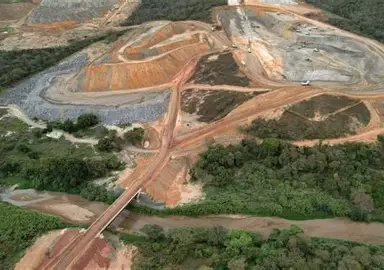
Once promoted as a symbol of economic transformation for one of Brazil’s poorest regions, the so-called “Lithium Valley” in the northeastern part of the state of Minas Gerais is struggling to deliver on its promises. Two years after the official launch of the ambitious project, residents of the Jequitinhonha Valley say the boom surrounding the “white gold” has mainly benefited mining companies, while poverty remains widespread and local pressures continue to grow.
In 2023, Brazilian authorities presented an ambitious industrial vision: turning this historically marginalized region into a technological hub focused on battery production and higher value-added industries. Regional leaders promised investment, skilled jobs, and territorial development through tax incentives and easier access to credit for investors.
However, the reality on the ground appears far more complex. According to figures reported by Le Monde, Brazil’s lithium production increased by 71 percent between 2023 and 2024, driven largely by mining company Sigma, which now accounts for around 70 percent of national output. Brazil currently represents nearly 10 percent of global lithium production. Despite these impressive numbers, the wealth generated has not significantly improved local living conditions.
Residents in several communities report a sharp rise in the cost of living, especially housing rents, caused by the arrival of outside workers linked to mining activity. In some towns, infrastructure remains too weak to absorb the sudden demographic pressure. Public services, already fragile, are struggling to keep pace.
Environmental and social concerns are also increasing. Some residents say their homes have developed cracks, which they attribute to vibrations caused by extraction operations. Others fear pollution and the long-term management of water resources. For many rural families, the promises of prosperity are now being replaced by a sense of abandonment and injustice.
Economists and researchers interviewed on the issue argue that the region is repeating an old economic pattern: exporting raw materials without developing local industrial value chains. In other words, lithium leaves the area as mineral concentrate, while battery manufacturing, advanced research, and the highest profits are generated elsewhere.
The situation has revived a broader debate in Brazil and other resource-rich nations: how to avoid the so-called “resource curse.” Lithium is now considered a strategic mineral for the global energy transition because of its essential role in electric vehicle batteries and energy storage systems. Yet without strong industrial policies, fair local redistribution, and strict environmental safeguards, its extraction may deepen historic inequalities rather than reduce them.
For the Jequitinhonha Valley, the issue now goes far beyond mining output. The real question is whether the lithium rush can still become a genuine project for human development, or whether it will remain another chapter of wealth extraction with little lasting benefit for local communities.