
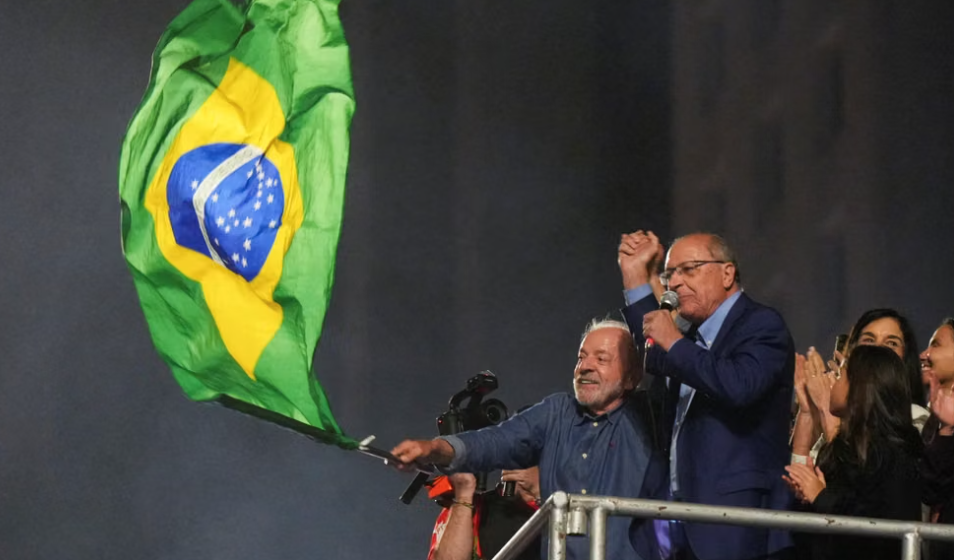
Lula’s re-election marks another remarkable chapter in his political career. A former metalworker and trade union leader, he became one of the most influential figures on the Latin American left after first taking office in 2003. Following two consecutive terms from 2003 to 2011 and his return to the presidency in 2023, he has now secured a fourth non-consecutive term, a historic achievement in Brazil’s recent democratic history. His victory comes amid intense political polarization, with voters deeply divided over the cost of living, public security, social inequality, and the country’s economic future.
Voter mobilization played a decisive role in the outcome. Although Flávio Bolsonaro had gained an advantage in the first round, Lula’s supporters intensified their efforts to persuade undecided voters and encourage participation among those who might otherwise have abstained. Public rallies and social media campaigns helped strengthen support for the incumbent president. According to figures reported after the election, the abstention rate stood at approximately 19%, a particularly low level in the country’s electoral history. This mobilization enabled Lula to reverse the initial trend and secure victory over his opponent.
Throughout his campaign, Lula emphasized his social policies and his commitment to reducing poverty and inequality. He advocated maintaining assistance programs for low-income households, strengthening workers’ rights, and protecting the environment, particularly the Amazon rainforest. His administration also highlighted progress in employment and efforts to combat deforestation during his third term. On the international stage, Lula pledged to maintain an independent foreign policy based on national sovereignty and stronger relations with a broad range of international partners.
Flávio Bolsonaro, by contrast, campaigned on a more conservative platform, focusing on public security, economic concerns, and the continuation of his father’s political movement. His candidacy represented an opportunity for the Bolsonaro political camp to return to power. Associated with nationalist and socially conservative positions, the movement has remained a significant force in Brazilian politics. Lula’s victory therefore represents a major setback for Bolsonaro supporters and other conservative forces across Latin America.
However, the election result does not guarantee Lula an easy fourth term. Legislative elections have strengthened conservative representation in Brazil’s National Congress, where Bolsonaro’s allies retain considerable influence. The president will therefore need to negotiate with lawmakers holding different political views to pass reforms and finance his social commitments. Without a reliable legislative majority, several government initiatives could face delays, particularly those requiring new legislation or additional public spending.
Economic challenges will also be central to Lula’s next term. His administration must balance continued social investment with the need to maintain control over public finances, particularly amid high debt levels and significant interest costs. Economic growth, household purchasing power, employment creation, and debt management will remain key concerns. To maintain public support, Lula will need to translate his electoral victory into tangible improvements in living standards while navigating budgetary constraints and political opposition.
Internationally, Lula’s re-election could help preserve Brazil’s distinct diplomatic position in a region where conservative governments and political movements continue to exert considerable influence. The president has emphasized Brazil’s strategic autonomy in its relations with major powers, as well as his support for multilateral cooperation, environmental protection, and social justice. His new term will be closely watched by international partners and trading nations, particularly because of Brazil’s importance to the regional economy, global agricultural markets, and international climate negotiations.
Despite the significance of his victory, political tensions may continue. Flávio Bolsonaro has challenged the conduct of the election and announced plans to seek its annulment, citing controversies surrounding the extension of voting hours in certain areas. These objections could intensify divisions between the two political camps, although electoral authorities have declared Lula the winner.
Ultimately, Luiz Inácio Lula da Silva’s re-election represents a major turning point for Brazil. It demonstrates his ability to mobilize his electoral base despite an unfavorable first-round result and a powerful conservative opposition. Nevertheless, his fourth term will be judged by his ability to improve living conditions, protect social and environmental achievements, and govern effectively in a deeply divided political landscape. Beyond Brazil’s borders, the result is also significant for the political balance of power across Latin America.