
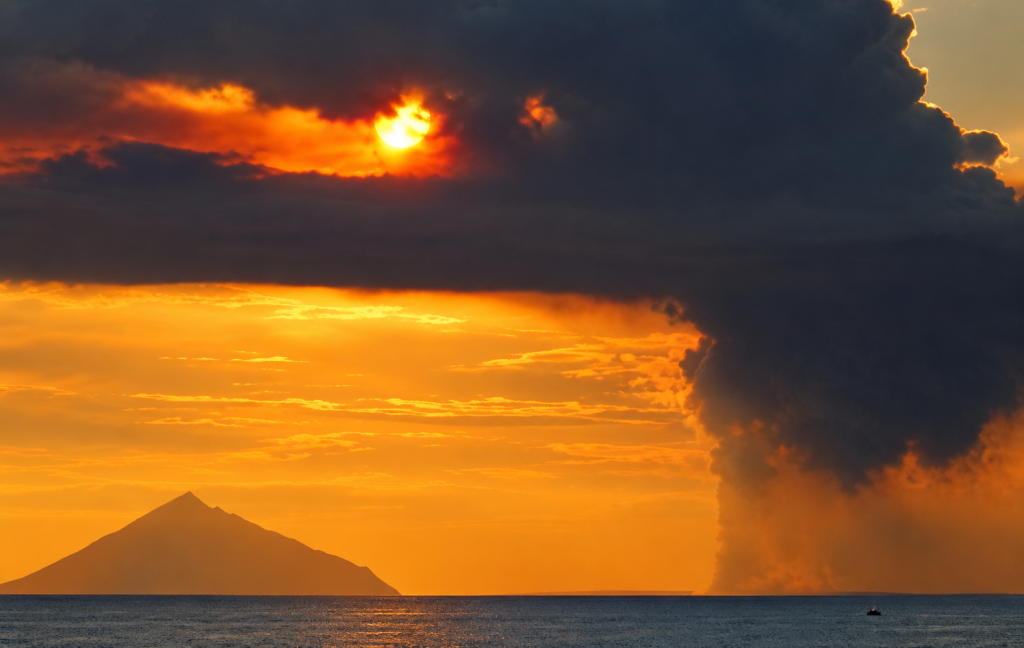
A major eruption of the Anak Krakatau volcano, located in the Sunda Strait between the Indonesian islands of Java and Sumatra, severely disrupted air traffic in Indonesia on Sunday, September 6, 2026. Due to volcanic ash spreading across the airspace, authorities suspended operations at Jakarta’s Soekarno-Hatta International Airport, the country’s main aviation hub.
Volcanic activity at Anak Krakatau has intensified since Friday. Several eruptions were recorded on Sunday, sending ash several thousand meters into the atmosphere. According to Indonesian authorities, the ash plume reached altitudes of up to around 15,000 meters above parts of Sumatra, while significant concentrations were also detected over Java.
Volcanic ash poses a serious risk to aviation because it can severely reduce visibility and potentially damage aircraft engines. The suspension of operations at Soekarno-Hatta Airport resulted in numerous flight cancellations and delays, affecting both domestic and international routes. Several airlines canceled flights to and from Jakarta as a result of the hazardous conditions.
The disruption has extended beyond the capital. Eight Indonesian airports have reportedly suspended operations because of volcanic ash. The Ministry of Transportation said that more than 1,500 flights and around 170,000 passengers were affected across the airports concerned. Several airports on Java have been designated as alternative facilities to allow some aircraft to be diverted when weather and safety conditions permit.
Authorities have also introduced measures to limit health risks in areas affected by ashfall. Some schools have suspended activities, while local authorities have encouraged remote learning where necessary. Residents have been advised to limit outdoor activities, wear masks and protect their eyes from volcanic particles. Fishing activities have also been suspended in certain areas.
Indonesian authorities are closely monitoring the situation. A weather-modification operation aimed at encouraging rainfall has been planned to help bring ash particles down from the atmosphere. Alternative airports have also been identified in an effort to maintain part of the country’s air connections once conditions become safe enough for flights to resume.
Anak Krakatau remains at alert level 3, the second-highest level in Indonesia’s volcanic warning system. Authorities have stated that there is currently no immediate tsunami threat. However, residents and visitors have been urged to remain vigilant and stay away from the active crater.
The latest eruption highlights Indonesia’s exposure to volcanic activity, as the country lies along the Pacific Ring of Fire. Anak Krakatau emerged after the catastrophic eruption of Krakatau in 1883. In 2018, another eruption of Anak Krakatau triggered a deadly tsunami in the Sunda Strait, killing more than 400 people. Authorities are therefore maintaining close surveillance of the volcano as its current activity continues.