
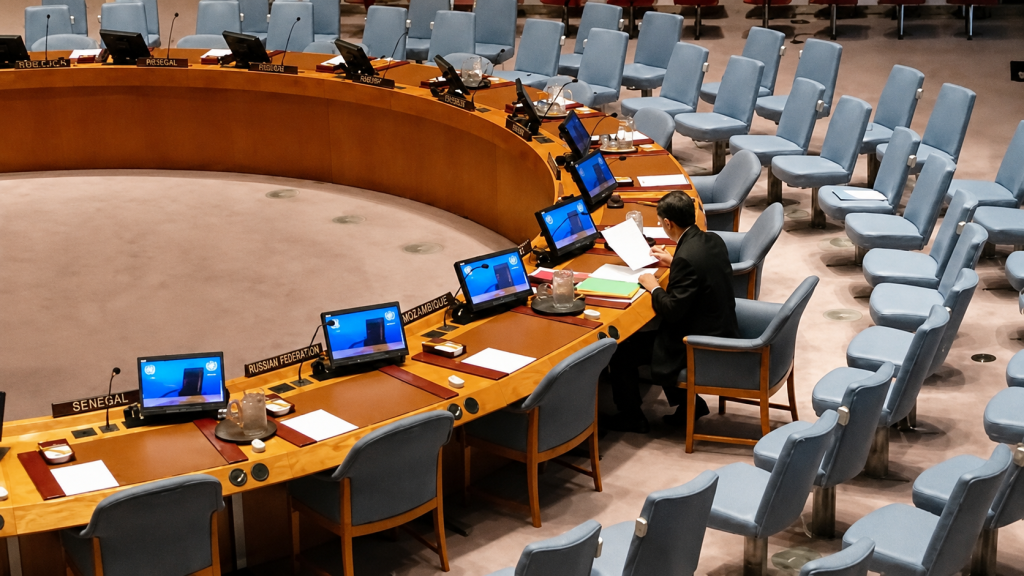
On the sidelines of the Africa Forward Summit held in Nairobi this week, the issue of African representation on the United Nations Security Council emerged as one of the major diplomatic topics discussed by continental leaders. Mahmoud Ali Youssouf, Chairperson of the African Union Commission, strongly reiterated Africa’s demand for two permanent seats within the UN’s most influential decision-making body.
For African leaders, this request aims to correct what they describe as a historical imbalance in global governance. Despite having 54 member states, a rapidly growing population, and an increasing role in international peacekeeping operations, Africa still has no permanent seat with veto power on the Security Council. Currently, only the United States, China, Russia, France, and the United Kingdom hold permanent positions inherited from the post-World War II international order.
During the ministerial meeting dedicated to United Nations reform, Mahmoud Ali Youssouf declared that Africa “is not asking for a favor, but for the correction of a historical injustice.” The statement reflects a long-standing position defended by the African Union, which argues that the current structure of the Security Council no longer reflects the geopolitical realities of the 21st century.
France once again expressed its support for expanding the Security Council to include two permanent African members. French Foreign Ministry spokesperson Pascal Confavreux also recalled France’s backing of the Franco-Mexican initiative that seeks to voluntarily limit the use of veto power in cases involving mass atrocities, genocide, or crimes against humanity. More than one hundred countries are reportedly supporting the diplomatic initiative.
However, implementing such a reform remains highly complex. Any modification to the composition of the Security Council would require an amendment to the United Nations Charter and the approval of the five current permanent members. Several African regional powers, including South Africa, Nigeria, and Egypt, are frequently mentioned as potential candidates for future permanent seats, although no official consensus has yet been reached.
The renewed debate at the Africa Forward Summit highlights Africa’s growing determination to play a stronger role in international decision-making on peace, security, and global governance. At a time marked by security crises in the Sahel, rising geopolitical tensions, and multiple regional conflicts, many African leaders believe that the continent’s absence among the permanent members of the Security Council is becoming increasingly difficult to justify.