
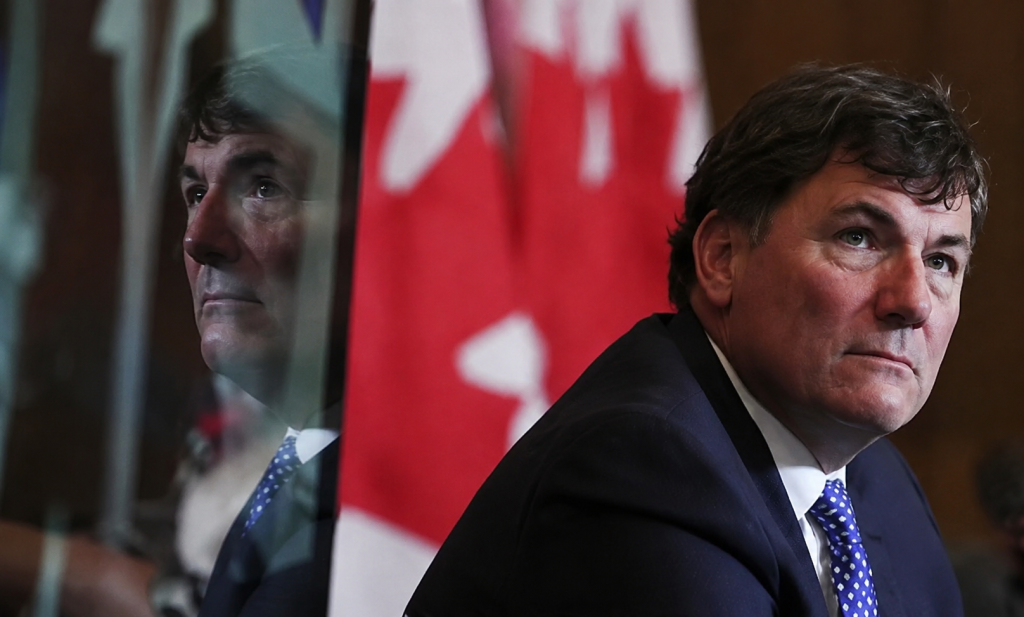
Canada and the United States are entering a decisive phase in their trade negotiations as Canadian Trade Minister Dominic LeBlanc returns to Washington on Thursday, August 20, to continue discussions with U.S. Trade Representative Jamieson Greer. The talks come just days before the deadline for a possible new round of U.S. tariffs, while Canada’s provincial governments remain divided over the concessions that Ottawa may have to make to secure a broader agreement.
LeBlanc and Greer are meeting for a second consecutive day as negotiators attempt to finalize a preliminary trade agreement. Their discussions follow what both sides described as significant progress. The emerging agreement could prevent the United States from imposing additional tariffs of up to 50% on around C$20 billion worth of Canadian exports. The new measures, which had been expected earlier in the week, have been temporarily postponed until Saturday, giving negotiators additional time to reach an agreement.
One of the most important elements under discussion is a possible reduction in U.S. tariffs on Canadian automobiles. According to sources familiar with the negotiations, tariffs on Canadian-built vehicles could fall from 25% to 15%. Tariffs on Canadian steel and aluminum could also be reduced from 50% to 25%, although the lower rate may be subject to import quotas. Such reductions would provide significant relief to industries that are deeply integrated into the North American economy and heavily dependent on access to the U.S. market.
The negotiations nevertheless remain complex because Washington is seeking concessions from Canada in return. Among the issues raised by the United States are access to the Canadian market for American agricultural products, dairy products, automobiles and alcoholic beverages. The Canadian supply-management system for dairy remains particularly sensitive. Ottawa has insisted that Canadian agriculture will be protected, while U.S. authorities continue to argue that Canadian market-access rules disadvantage American producers.
The issue of American alcohol has become another major source of tension. Eight of Canada’s ten provinces currently restrict or have restricted the sale of U.S. alcoholic products, measures that were introduced in response to earlier American tariffs. Prime Minister Mark Carney has asked provincial leaders to consider returning American alcohol products to store shelves as part of a potential agreement with Washington.
However, Canada’s provinces are far from united on this issue. Quebec has adopted a particularly cautious position. Premier Christine Fréchette said the negotiations were still far from over and that Quebec needed additional information before deciding whether the emerging agreement adequately protects the province’s dairy and forestry sectors. She also rejected the idea of immediately restoring American alcohol products to Quebec stores, emphasizing that decisions concerning the provincial liquor market remain under Quebec’s authority.
Ontario also has significant interests at stake. Before the restrictions were introduced, the province’s LCBO sold approximately C$1 billion worth of American alcohol annually, including about C$723 million in U.S. products. Restoring those sales could therefore have important economic consequences, while also representing a highly visible Canadian concession in the trade dispute.
Other provincial leaders have also expressed reservations about simply returning to the economic relationship that existed before the trade conflict. Saskatchewan Premier Scott Moe has argued that the previous status quo is no longer realistic, while British Columbia Premier David Eby has similarly indicated that Canada should not expect relations with the United States to return to exactly where they were before the tariff dispute.
For Prime Minister Mark Carney, the challenge is therefore not limited to reaching an agreement with Washington. Ottawa must also maintain sufficient support among Canada’s provinces, some of which have direct control over areas affected by U.S. demands. This creates an additional layer of complexity because the federal government negotiates internationally, while several of the measures being requested by Washington fall partly or entirely under provincial jurisdiction.
The automobile, steel and aluminum sectors are particularly important to the Canadian economy. A reduction in U.S. tariffs could help protect Canadian manufacturing jobs and reduce pressure on companies operating across the North American supply chain. The proposed reduction in auto tariffs from 25% to 15%, for example, could provide greater stability to Canadian vehicle manufacturers and their suppliers. However, the precise conditions attached to the tariff reductions have yet to be fully disclosed.
The situation is also politically sensitive because many Canadians oppose further concessions to Washington. A recent Leger poll found that slightly more than half of respondents wanted the Canadian government to maintain a hard line and avoid making additional concessions, while fewer than one-third supported a more flexible approach. The survey also showed significant support for stronger retaliatory measures against the United States.
President Donald Trump, meanwhile, has presented the emerging agreement as beneficial to both countries. He has suggested that the deal would improve access for American farmers and manufacturers to the Canadian market. Trump has also indicated that the agreement could eliminate or significantly reduce Canadian tariffs on certain U.S. agricultural products. Canadian officials, however, have emphasized that the country’s dairy supply-management system remains protected and that negotiations are still underway.
Another potential element of the broader discussions is the Keystone XL pipeline. Trump recently suggested that the long-delayed project could potentially be revived. Although it is not clear whether the pipeline forms an official part of the emerging trade agreement, its possible revival would be significant for Canada’s energy sector and could strengthen economic ties between the two countries.
The negotiations also have implications beyond the immediate tariff dispute. If Canada and the United States succeed in reaching an interim agreement, it could create the conditions for broader discussions concerning the future of the North American trade framework. The two countries are expected to continue discussions surrounding the United States-Mexico-Canada Agreement, or USMCA, and resolving the current dispute could help establish a more stable basis for those negotiations.
The economic stakes are considerable. Canada is highly dependent on the U.S. market, with the vast majority of its merchandise exports going south of the border. Prolonged uncertainty over tariffs could affect investment decisions, manufacturing activity, employment and supply chains. While the proposed tariff reductions could provide some relief, Canadian businesses remain concerned about the long-term stability of the bilateral trading relationship.
Dominic LeBlanc’s return to Washington therefore comes at a critical moment. The Canadian negotiator must attempt to convert the progress reported in recent meetings into a concrete agreement while protecting Canada’s most sensitive economic sectors. At the same time, Prime Minister Mark Carney must convince provincial governments that any concessions made to Washington are justified by the economic benefits obtained in return.
The outcome remains uncertain. The two governments appear closer to an agreement than they were only a few days ago, but several important details have yet to be finalized. The dispute over American alcohol, dairy-market access, automobile tariffs and the protection of Canadian industries continues to expose differences between Ottawa, Washington and Canada’s provinces. With the tariff deadline approaching, the coming days could determine not only whether a new escalation is avoided, but also the future direction of Canada–U.S. economic relations.