
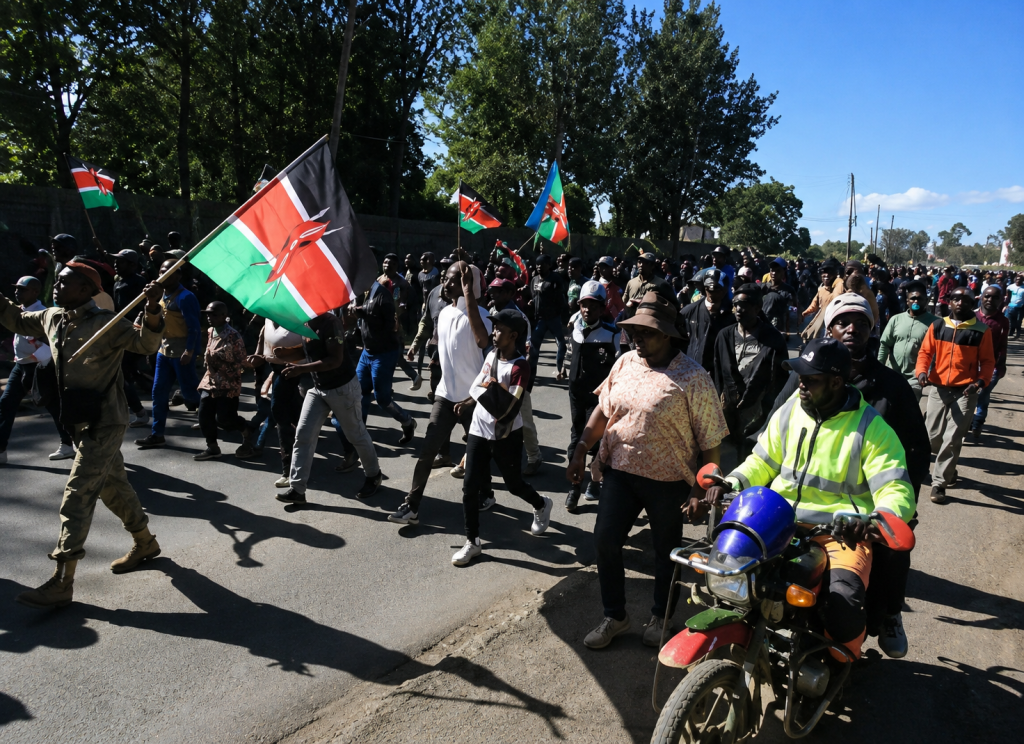
Public outrage continues to mount in Kenya over a controversial plan to establish an Ebola quarantine facility intended to accommodate American citizens potentially exposed to the virus. On June 9, hundreds of protesters once again gathered in the town of Nanyuki, about 200 kilometers north of Nairobi, to oppose the construction of the facility at the Laikipia Air Base.
The demonstrations escalated into clashes with security forces, with police reportedly using tear gas to disperse crowds. Several arrests were made, and local reports indicated that one protester was killed during the unrest, further intensifying tensions surrounding the project.
The U.S.-backed facility is designed to host American nationals who may have been exposed to Ebola amid the ongoing outbreak affecting parts of the Democratic Republic of the Congo and Uganda. Plans for the center include a 50-bed quarantine unit and a team of approximately 30 American healthcare professionals. U.S. officials argue that the facility would provide a secure location close to outbreak zones, reducing the need for long-distance medical evacuations to the United States.
However, many Kenyans have criticized the initiative, claiming that it was introduced without sufficient consultation with local communities. Opponents fear that Kenya could become a hub for managing foreign health crises despite having no reported Ebola cases within its borders. Critics have also accused Washington of applying a double standard by choosing not to quarantine potentially infected citizens on U.S. soil.
The controversy has also entered the legal arena. In late May, Kenya’s High Court temporarily suspended the project following a petition filed by civil society groups and local stakeholders. A hearing is scheduled for June 23 to determine the legality of the agreement between Nairobi and Washington. Despite the court order, diplomatic discussions and preliminary preparations for the facility have continued.
Kenyan President William Ruto has defended the project, describing it as an act of international solidarity and an opportunity to strengthen the country’s public health preparedness. Nevertheless, his position remains highly controversial among sections of the public, where concerns about national sovereignty and public safety remain strong.
As the Ebola outbreak continues to raise concerns across the Great Lakes region, the dispute over the proposed quarantine center in Nanyuki highlights the complex challenges of balancing public health priorities, international cooperation, and local community acceptance.