
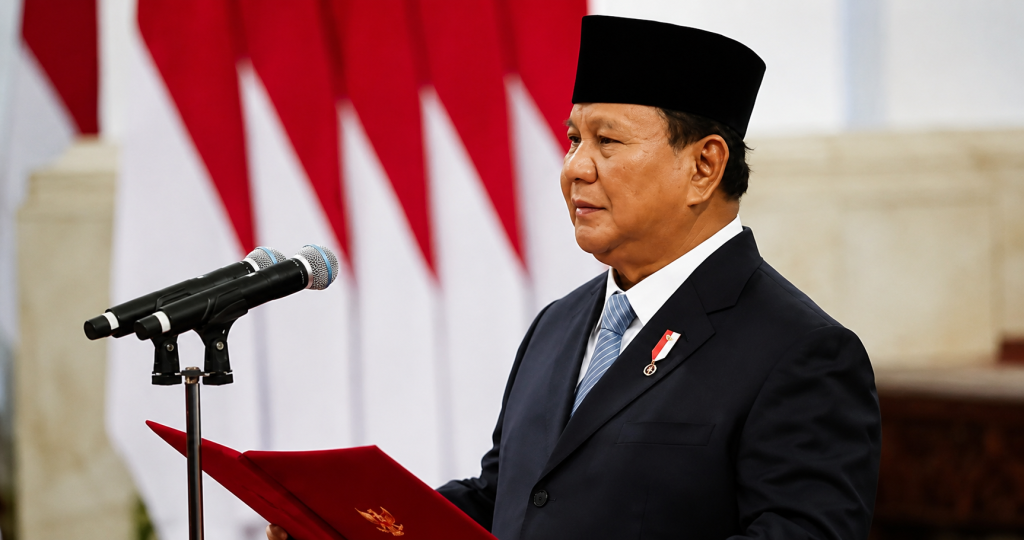
Indonesian President Prabowo Subianto is facing growing concern from investors after unveiling a major plan to increase state control over the country’s strategic natural resource exports. The new economic direction, announced on May 20 in Jakarta, triggered turbulence across Indonesian financial markets and reignited debates over the resource nationalism promoted by the head of state.
The government plans to place the export management of key commodities such as nickel, palm oil, and coal under the authority of a state-owned company linked to the sovereign wealth fund Danantara Indonesia. Officials say the objective is to combat fraud, underreporting, and massive financial losses allegedly caused by opaque trading practices in the raw materials sector. According to President Prabowo, Indonesia may have lost more than $900 billion between 1991 and 2024 because of irregularities in commodity exports.
The reform, which is expected to begin gradually in September 2026 before full implementation in January 2027, represents another step in Indonesia’s increasingly interventionist economic policy. Since taking office, Prabowo Subianto has launched several ambitious state-led programs, including free school meals for millions of children, government-funded rural cooperatives, tighter control over agricultural and energy resources, and greater centralization of export-related financial flows.
However, the announcements immediately sparked a negative reaction from financial markets. Several companies operating in the commodities sector saw sharp declines on the Jakarta Stock Exchange. Investors are particularly worried about reduced profit margins for private firms, growing bureaucracy in trade operations, and the potential weakening of Indonesia’s competitiveness in global markets.
Concerns are also emerging from international credit agencies. Fitch and Moody’s have downgraded their outlooks on Indonesia’s sovereign debt, citing increasing economic centralization and concerns about the credibility of the government’s fiscal strategy. Some analysts also fear that creating a near-state monopoly over exports could increase the risks of corruption and administrative inefficiency.
Despite the criticism, the Indonesian government continues to defend its ambitious economic targets. Jakarta aims to achieve economic growth between 5.8% and 6.5% by 2027 while maintaining the public deficit below 3% of GDP. Authorities argue that stronger state control over national resources will help protect Indonesia’s economy in an increasingly unstable global environment marked by geopolitical tensions and volatile energy markets.