
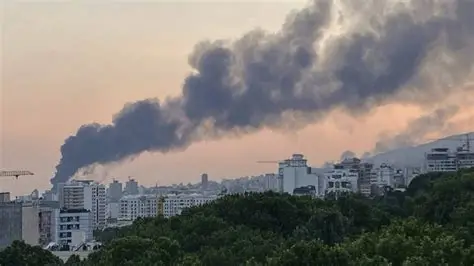
On February 28, 2026, a pivotal moment unfolded in Middle Eastern geopolitics. Coordinated strikes carried out by the United States and Israel targeted strategic sites in Iran, triggering an unprecedented wave of international reactions. The operation aimed at military infrastructure and Iran’s ballistic and nuclear capabilities. Washington and Tel Aviv described the strikes as preemptive actions against perceived imminent threats, while Tehran condemned them as a blatant act of aggression, promising retaliation.
Beyond the military event itself, the region’s strategic balance is at stake. Iran holds a central position in Middle Eastern security, influencing Iraq, Syria, Lebanon, and Yemen, and playing a key role in global energy security. Any direct confrontation involving external powers increases the risk of a broader regional conflict, potentially drawing in non-state actors and indirect military alliances.
The international community’s response has been swift and varied. The United Nations, through Secretary-General António Guterres, strongly condemned the escalation and called for an immediate cessation of hostilities, emphasizing that unilateral use of force undermines global stability already strained by other crises. An emergency meeting of the UN Security Council was convened to assess the legal and security implications of the operation.
In Europe, the European Union expressed deep concern and urged all parties to exercise maximum restraint. Several capitals fear not only an open war but also a new wave of migration and energy instability. French President Emmanuel Macron called for a swift diplomatic solution, stressing the importance of preserving dialogue channels on Iran’s nuclear program.
Major powers opposing the United States adopted a more critical stance. Russia condemned the strikes as destabilizing actions that could compromise global security, while China called for respect for state sovereignty and the peaceful resolution of disputes. These positions reflect broader strategic rivalries, where each regional crisis becomes a platform for influence among great powers.
Legally, debate centers on the legitimacy of so-called “preemptive” strikes. International law allows self-defense in cases of clearly imminent threats, but the notion of imminence is open to interpretation. Many states argue that military action without an explicit Security Council mandate raises serious questions regarding compliance with the United Nations Charter.
The economic implications are equally significant. The Middle East accounts for a substantial portion of global hydrocarbon production and transit. Escalation could disrupt key maritime routes, particularly in the Persian Gulf, and trigger spikes in oil and gas prices. Financial markets, already sensitive to geopolitical uncertainty, may react with increased volatility and flight to safe-haven assets.
Finally, the primary risk remains a spiral of action and retaliation. If Iran responds militarily, directly or via allied groups in the region, escalation could quickly extend beyond bilateral conflict. Such dynamics would undermine diplomatic efforts to contain Iran’s nuclear program and stabilize the region.
In conclusion, the February 28, 2026 strikes are not merely a military episode; they represent a critical juncture for the international order. Balancing security imperatives, strategic rivalries, and legal constraints, the global community faces a major challenge: preventing this confrontation from escalating into a regional conflict with lasting worldwide repercussions.