
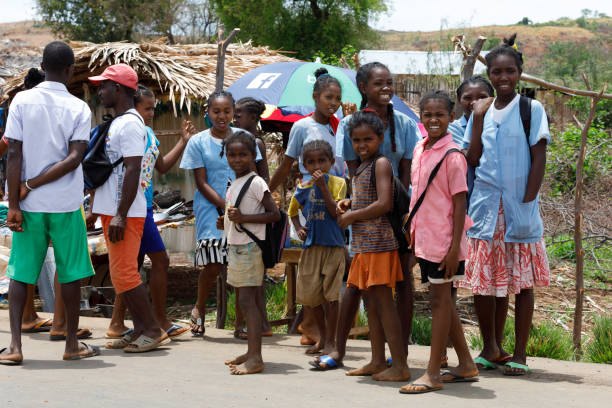
The publication of the results of the seventh Multiple Indicator Cluster Survey (MICS-7) marks a significant milestone in the evolution of Madagascar’s national statistical system. Officially presented in Antananarivo, this large-scale survey, conducted by the Institut national de la statistique (INSTAT) with technical support from UNICEF and financial backing from partners such as the Banque mondiale and the Union européenne, now stands as one of the most comprehensive social data sources available in the country. It covers nearly 43% of the indicators related to the Sustainable Development Goals (SDGs), providing a strategic foundation for guiding budgetary and sectoral decisions.
Conducted among more than 21,000 households across all 23 regions of the country, MICS-7 offers a detailed snapshot of the living conditions of Malagasy children, women, and households. From a methodological standpoint, the cluster sampling approach ensures both national and regional representativeness, enabling meaningful territorial comparisons in a country characterized by significant geographic and socio-economic disparities. This regional dimension is essential for improving the targeting of public policies, particularly in remote rural areas where multidimensional poverty remains widespread.
The findings highlight a complex and contrasting reality. In terms of nutrition, the prevalence of stunting among children under five remains high, reflecting persistent structural chronic malnutrition. This issue is not merely a public health concern; it represents a major constraint on human capital formation and long-term productivity. Early childhood malnutrition has lasting effects on cognitive development, educational achievement, and future labor market integration. MICS-7 therefore confirms that poverty reduction strategies must strongly integrate nutritional components, including community health programs, school feeding initiatives, and maternal support interventions.
In the health sector, vaccination coverage remains insufficient, exposing a substantial proportion of children to preventable diseases. This shortfall reveals systemic challenges such as logistical constraints, limited health infrastructure, shortages of qualified personnel, and budgetary pressures. It also underscores the need to strengthen health system governance, vaccine supply chains, and community awareness efforts. The stakes extend beyond sectoral performance; they concern the country’s overall resilience to epidemic risks.
Regarding education, while access to primary schooling has improved, completion rates and learning quality remain concerning. The gap between enrollment and successful completion points to structural weaknesses, including overcrowded classrooms, a lack of adequately trained teachers, and household poverty that forces some children to drop out. MICS-7 demonstrates that improving educational indicators cannot rely solely on access expansion; it requires qualitative reforms focused on pedagogical performance and the reduction of regional inequalities.
Access to essential services also reveals significant deficits. A considerable share of the population still lacks access to improved drinking water and adequate sanitation facilities, and open defecation remains prevalent in certain areas. These figures reflect infrastructure gaps that directly affect public health, human dignity, and the economic attractiveness of territories. Similarly, limited access to electricity constrains productive activities, innovation, and the modernization of public services. These findings confirm that investments in basic infrastructure must be prioritized as key drivers of structural transformation.
Nevertheless, certain indicators show notable progress, particularly in birth registration. Improvements in civil registration represent a major institutional advancement, as legal identity conditions access to social rights, education, and healthcare services. This positive trend demonstrates that targeted reforms, when supported by clear political commitment and adequate technical assistance, can produce tangible results.
Beyond the statistics, the central value of MICS-7 lies in its practical application. The availability of reliable data enables more rational budget planning, improved resource allocation, and rigorous monitoring and evaluation of public policies. In a context of limited financial resources, the effectiveness of public spending depends on the ability to accurately target the most vulnerable populations. MICS-7 therefore provides an empirical basis for strengthening transparency, accountability, and the overall performance of public action.
From a macroeconomic perspective, these results also carry strategic importance for technical and financial partners. Robust data enhances the country’s credibility in international negotiations and facilitates the mobilization of external funding. It also helps align cooperation programs with clearly identified needs, reducing the risks of duplication and inefficiency.
Ultimately, MICS-7 is not merely a statistical exercise; it is a governance instrument. It highlights the structural vulnerabilities of human development in Madagascar while identifying concrete areas for improvement. The key challenge now lies in the authorities’ capacity to translate these findings into structural reforms, integrate data into sectoral planning, and institutionalize a culture of evidence-based decision-making. In this respect, MICS-7 can become a cornerstone of more inclusive, equitable, and data-driven development in Madagascar.