
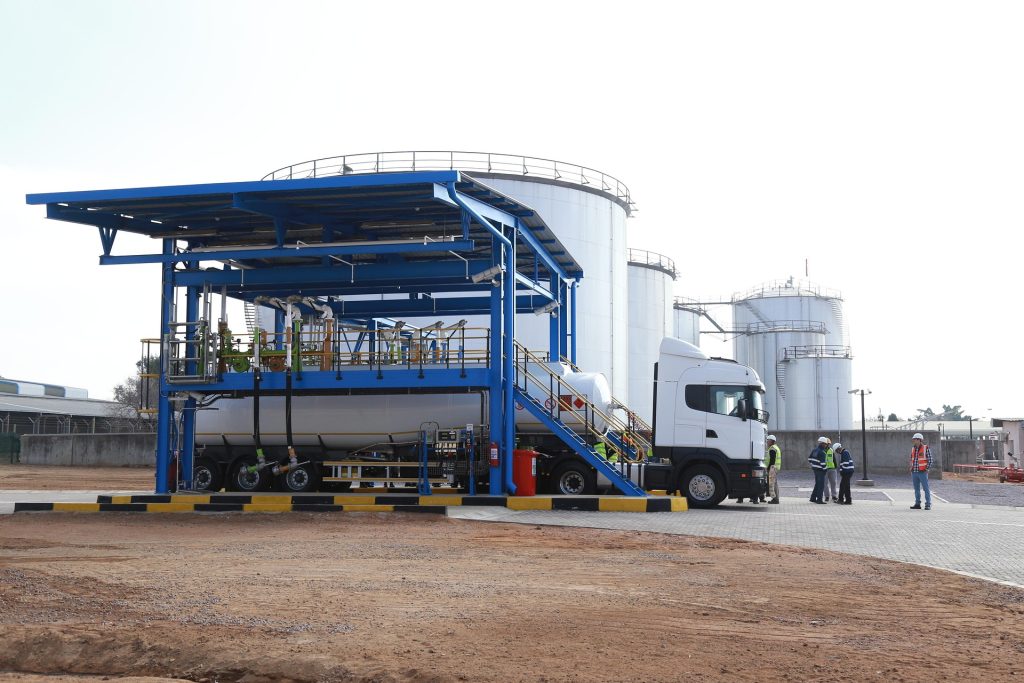
Madagascar Oil has officially announced the restart of heavy fuel production at the Tsimiroro oil field, a major deposit located in the Morondava Basin. The relaunch represents an important milestone for Madagascar’s petroleum sector and could play a key role in strengthening the country’s energy security.
According to company officials, the restart is not simply a technical resumption following a period of inactivity. It forms part of a broader strategy built on financial restructuring, technical validation, and the reinforcement of operational capabilities. The objective is to move gradually from a pilot production phase toward an expanded and more sustainable level of exploitation.
In the initial stage, production is expected to reach approximately 300 barrels of oil per day. Over time, Madagascar Oil aims to significantly increase this output, targeting 3,000 barrels per day within roughly 24 months. To achieve this goal, the company plans several operational measures, including reactivating existing wells, drilling new ones, and upgrading steam injection facilities used to extract heavy crude oil.
The Tsimiroro field is one of Madagascar’s most significant onshore petroleum projects. Located in the sedimentary Morondava Basin, it contains substantial heavy oil resources, estimated at several billion barrels, making it one of the country’s largest hydrocarbon prospects.
The resumption of production also follows the resolution of logistical challenges that previously forced the temporary shutdown of operations. In particular, storage constraints had limited the ability to continue extraction. By monetizing existing stockpiles and restoring storage capacity, the company has been able to restart production activities.
Madagascar Oil already supplies several domestic industrial clients, including companies operating in the energy, agribusiness, and construction sectors. These supply agreements help secure a stable market for the heavy fuel produced at Tsimiroro and strengthen its role as an alternative energy source for Madagascar’s industrial sector.
Beyond its industrial implications, the project also carries significant strategic importance for the country. Increasing domestic oil production could help reduce Madagascar’s dependence on imported petroleum products, a critical issue for the national economy. In this context, the company is also considering partnerships with key energy sector stakeholders, including the national electricity utility.
However, the long-term success of the project will depend on several structural factors. Madagascar Oil emphasizes the need for regulatory stability, effective implementation of the national petroleum code, and improvements in logistical infrastructure, particularly the rehabilitation of key roads used to transport petroleum products.
Ultimately, the restart of production at Tsimiroro could mark a turning point for Madagascar’s oil industry. If production targets are achieved and regulatory and infrastructure conditions continue to improve, the project could become a major pillar of the country’s energy and industrial development in the years ahead.