
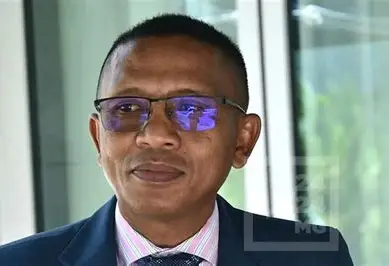
The appointment of Mamitiana Rajaonarison as Prime Minister marks a significant new phase in Madagascar’s ongoing political transition. Announced on March 15, 2026, by President Michaël Randrianirina, the decision comes just days after the dissolution of the previous government led by Herintsalama Rajaonarivelo, highlighting a rapid restructuring of the executive branch.
This leadership change takes place within an accelerated political context. President Michaël Randrianirina, who came to power in October 2025 following a period of political tensions and unrest, has initiated a process of institutional reform aimed at restoring state authority, strengthening governance, and rebuilding public trust.
The choice of Mamitiana Rajaonarison is widely seen as strategic. A seasoned senior civil servant and former gendarmerie officer, he has built a strong reputation in the fight against corruption and illicit financial flows. Since 2021, he has served as head of the Financial Intelligence Unit (SAMIFIN), the body responsible for combating money laundering in Madagascar. He also held key positions within the Independent Anti-Corruption Bureau (BIANCO), further reinforcing his profile as a technocrat with deep institutional experience.
Through this appointment, the president is clearly signaling his intention to place integrity and accountability at the core of government action. During the official announcement, he emphasized the need to steer the country along a “clean path,” underlining the importance of transparent and ethical leadership in addressing national challenges.
Politically, the move comes amid strong public expectations. Madagascar continues to face major structural challenges, including issues related to purchasing power, access to essential services, employment, and infrastructure. Citizens are now expecting tangible results, while international partners and investors are closely monitoring the direction taken by the new administration.
The next key step will be the formation of a new government, which will provide further insight into the administration’s strategic priorities and policy direction. As part of the transition roadmap, authorities have outlined plans for institutional reforms, national consultations, and the organization of elections by 2027.
In this context, Mamitiana Rajaonarison’s appointment opens a new political chapter for Madagascar. Balancing reform ambitions, public expectations, and the need for stability, this leadership change could prove pivotal for the country’s future in a still fragile but hopeful environment.