
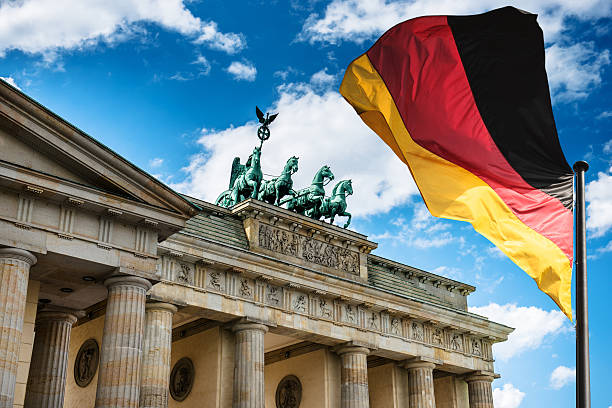
Germany is undergoing a profound strategic transformation as it announces its intention to strengthen its role within the North Atlantic Treaty Organization, in a context marked by persistent geopolitical tensions and a reshaping of Europe’s security balance. This development is not merely a diplomatic adjustment but part of a structural shift that began after the invasion of Ukraine by Russia in 2022, an event that fundamentally altered threat perceptions across the European continent. Long committed to a culture of military restraint rooted in its twentieth-century history, Germany now appears ready to assume a more assertive role in collective defense.
The turning point came under the leadership of Chancellor Olaf Scholz, who declared a “Zeitenwende,” or historic turning point, acknowledging that Europe’s security environment could no longer rely on the assumptions that prevailed after the end of the Cold War. The announcement of a €100 billion special defense fund marked a symbolic and political break with decades of underinvestment in the armed forces. Since then, Berlin has committed to meeting, and potentially exceeding, NATO’s benchmark of allocating at least 2 percent of its gross domestic product to defense. This decision responds both to the need to restore Germany’s military credibility and to longstanding calls from allies, particularly the United States, for a more balanced sharing of security responsibilities.
Beyond budgetary commitments, strengthening Germany’s role requires a comprehensive modernization of the Bundeswehr. Years of limited investment had resulted in capability gaps, including outdated equipment, limited operational readiness, and insufficient ammunition stockpiles. Berlin is now investing in critical strategic capabilities such as air defense systems, enhanced mobility for ground forces, and the modernization of its air force, including aircraft compatible with NATO’s nuclear sharing arrangements. The objective is twofold: to restore national military effectiveness and to reinforce Germany’s ability to operate within multinational frameworks.
Germany’s increased engagement must also be understood within a broader European perspective. As the largest economy in the European Union, Germany carries a particular responsibility for the continent’s stability. Countries in Central and Eastern Europe, especially those geographically closer to Russia, expect a clear and sustained German commitment. Strengthening Germany’s presence on NATO’s eastern flank is therefore part of a broader deterrence strategy aimed at preventing further military escalation. At the same time, the evolving global strategic environment, characterized by growing rivalry between major powers and the gradual strategic pivot of Washington toward the Indo-Pacific, is encouraging European nations to assume greater responsibility for their own defense while maintaining a strong transatlantic alliance.
Domestically, this strategic shift is not without debate. Public opinion in Germany has traditionally favored military restraint, and questions remain about balancing defense spending with social priorities and the green transition. However, the perception of a persistent security threat and the need to safeguard European stability have generated broader political support for sustained military investment. This evolution reflects a maturing strategic outlook in which Germany acknowledges that its economic weight must be matched by a proportional capacity for security leadership.
Ultimately, Germany’s determination to reinforce its role within NATO signals a historic repositioning. No longer content to act primarily as a financial contributor or logistical hub, Germany is emerging as a central pillar of Europe’s collective defense. This strategic choice is reshaping internal dynamics within the alliance and contributing to the development of a renewed European security architecture built on stronger European responsibility and a revitalized transatlantic partnership.