
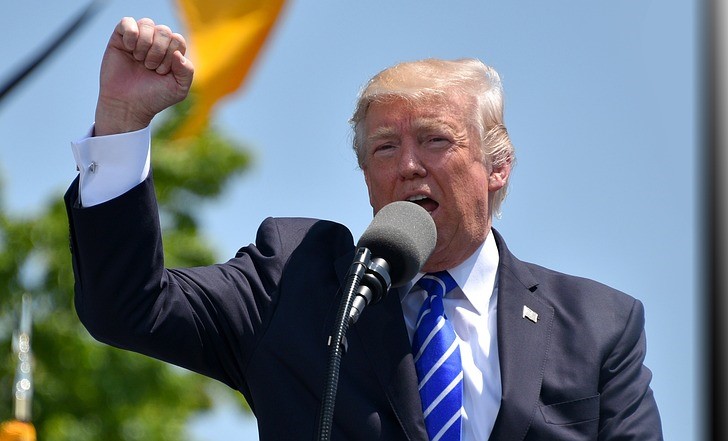
In the aftermath of the U.S. military intervention in Venezuela, President Donald Trump has hardened his rhetoric on the international stage, raising the prospect of future actions against several countries. This sequence marks a new phase of diplomatic tension, in which Washington appears determined to project a firmer stance toward governments deemed hostile or strategically sensitive.
Without dwelling at length on the operation carried out in Caracas, Donald Trump focused instead on broadening the scope of his remarks. He referenced several states and territories he considers vital to U.S. security and geopolitical interests, implying that the United States could act unilaterally if its priorities were not respected. This rhetoric immediately sparked concern among allies and regional partners alike.
Denmark found itself at the center of tensions due to comments targeting Greenland. The U.S. president emphasized the territory’s strategic importance in the Arctic context, suggesting a more assertive American involvement. Danish authorities responded firmly, reiterating the non-negotiable nature of their sovereignty over the autonomous territory and warning of risks to Western alliance cohesion.
In Latin America and the Caribbean, Cuba was also singled out by accusatory statements. Donald Trump described the Cuban regime as weakened, reviving fears of a return to direct confrontation. Mexico, for its part, rejected any form of pressure or interference, reaffirming its categorical refusal to allow a foreign military presence on its soil, even under the guise of security cooperation.
These statements triggered a wave of diplomatic reactions, revealing growing unease over the tone adopted by Washington. Several governments expressed concern about the repeated use of threats as a tool of foreign policy, arguing that such an approach undermines principles of dialogue and mutual respect among states.
For many analysts, this strategy reflects a desire to project power, aimed as much at the U.S. domestic audience as at international partners. However, it carries significant risks, particularly that of a verbal or political escalation that could prove difficult to contain and fuel new regional tensions.
In this context, attention is now turning to the responses of international institutions and major U.S. allies. How these actors react to this series of threats could have a lasting impact on the global diplomatic balance, at a time when international stability already appears severely strained.