
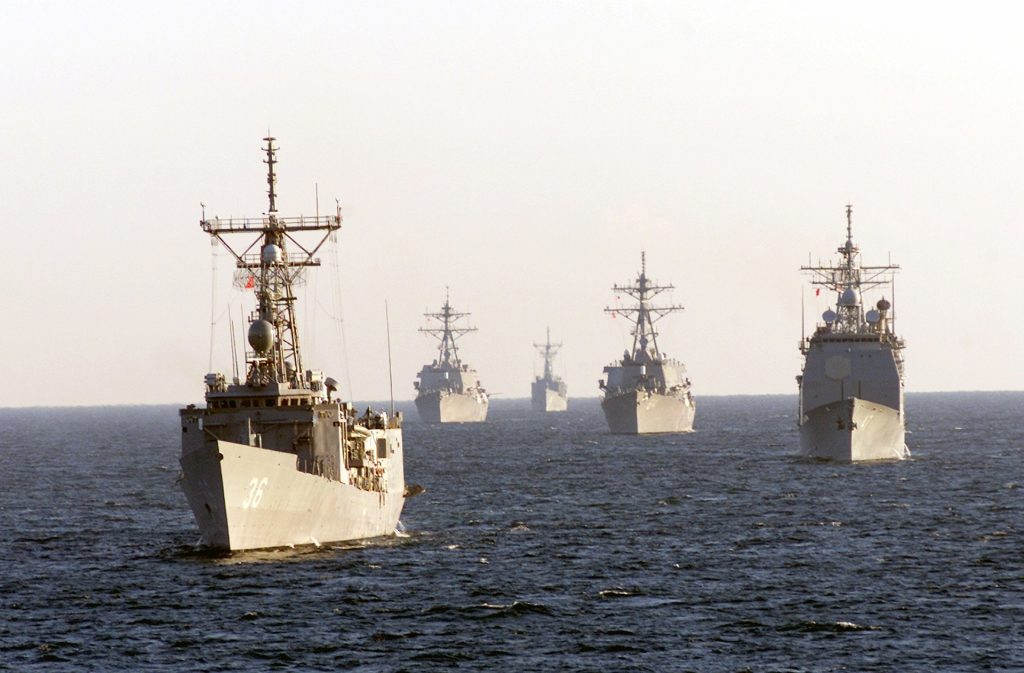
In mid-January 2026, South Africa found itself at the center of international attention after hosting major naval exercises conducted under the banner of the expanded BRICS group. Held off the country’s southern coast near Simon’s Town, the drills brought together several foreign navies, including those of China, Russia, Iran, and South Africa. Officially presented as an initiative to strengthen maritime security and military cooperation, the exercises have nonetheless triggered significant political and diplomatic controversy.
South African authorities argue that the drills are designed to enhance the ability of participating navies to respond to shared maritime threats such as piracy, maritime terrorism, illegal trafficking, and search-and-rescue operations. In a highly globalized economy, the protection of sea lanes is considered a strategic priority, particularly for South Africa, which sits astride one of the world’s busiest maritime routes linking Asia, Europe, and the Americas.
Beyond the official narrative, however, the list of participants has fueled intense debate. The involvement of countries under international sanctions, notably Russia and Iran, has raised questions about the direction of Pretoria’s foreign policy. Opposition parties within South Africa contend that the government is undermining the country’s long-standing tradition of non-alignment by engaging militarily with controversial partners. According to critics, the BRICS label is being used to legitimize a broader strategic shift that goes beyond routine defense cooperation.
The timing of the exercises also coincides with strained relations between South Africa and several Western nations, particularly the United States. In Washington, some analysts interpret the drills as a strong political signal, reflecting Pretoria’s growing determination to deepen ties with emerging powers and diversify its strategic partnerships. This perception has heightened concerns about a gradual distancing of South Africa from its traditional Western allies.
The South African government rejects these accusations, insisting that the country has a history of conducting military exercises with a wide range of partners, including Western countries. Officials emphasize that military cooperation does not automatically imply political alignment and that such initiatives primarily serve operational and technical objectives, especially at a time when the national navy faces significant budgetary constraints.
Ultimately, these naval drills highlight broader shifts in the global geopolitical landscape. The expansion of the BRICS framework and the rise of South-South cooperation reflect changing power dynamics, as states seek greater strategic autonomy. In South Africa, the exercises underscore a delicate balancing act: strengthening defense capabilities and international cooperation while carefully managing domestic criticism and complex diplomatic relationships.