
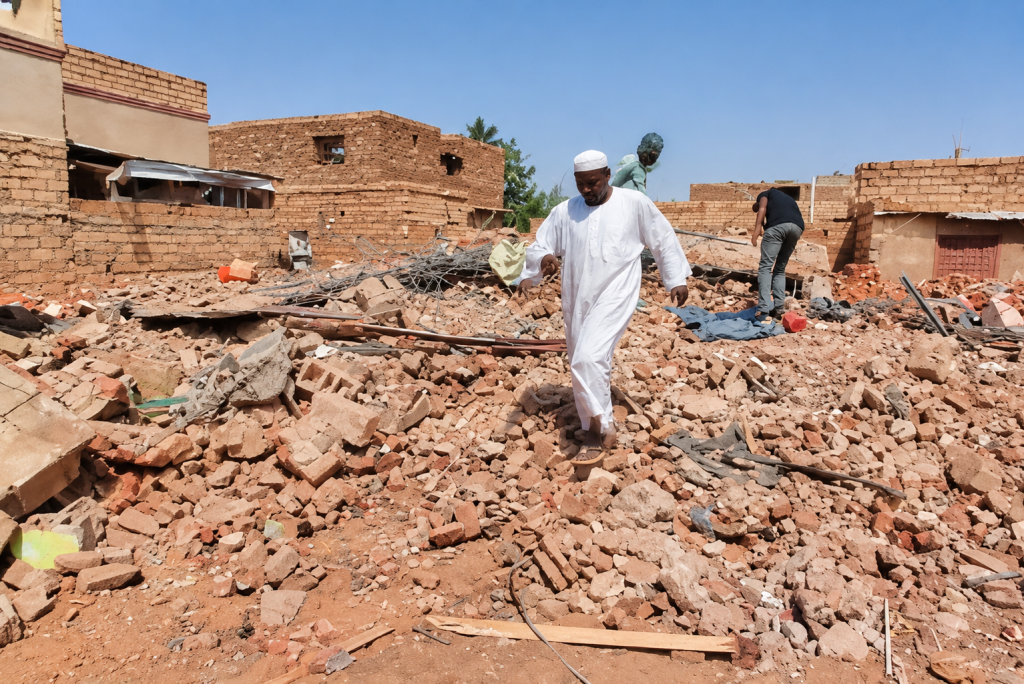
Several homes were reportedly damaged or destroyed in the strikes. In some neighbourhoods, residents attempted to rescue family members trapped beneath the rubble. One witness reported that a strike had hit the home of a mosque’s muezzin in Jebel Aulia, approximately 45 kilometres south of central Khartoum. At this stage, Sudanese authorities have not released an official casualty toll.
The attacks also affected United Nations facilities. The UN Office for the Coordination of Humanitarian Affairs (OCHA) confirmed that a building housing members of its staff had been damaged. The incident occurred in a residential neighbourhood, placing humanitarian workers at considerable risk. The United Nations condemned the attack, stressing that its personnel and facilities are protected under international humanitarian law. It also reiterated that civilians must never be targeted in military operations.
On the diplomatic front, a Sudanese army source told Agence France-Presse (AFP) that the drones were allegedly launched from Bahir Dar Airport in Ethiopia. Khartoum has repeatedly accused its neighbour of supporting the Rapid Support Forces (RSF), the paramilitary group fighting the Sudanese army since April 2023, particularly by allowing it to use Ethiopian territory for aerial operations. However, Addis Ababa has rejected these allegations, denying any involvement in the attacks or support for the paramilitary forces.
Relations between the two countries have deteriorated sharply in recent weeks. In early November, Sudan announced that it had referred the matter to the United Nations Security Council and the African Union, denouncing what it described as Ethiopian aggression. Ethiopia, in turn, has accused Khartoum of supporting rebel groups linked to the Tigray People’s Liberation Front (TPLF), allegations that Sudanese authorities have also rejected. This diplomatic confrontation is unfolding against a backdrop of growing security tensions across the region.
The latest strikes are part of a war that has devastated Sudan since April 2023, pitting the regular army against the Rapid Support Forces. The conflict has triggered a major humanitarian crisis, leaving more than 200,000 people dead according to estimates cited by humanitarian workers and causing mass displacement. Both sides are increasingly relying on drones, which can strike targets hundreds of kilometres away without directly exposing their fighters to danger. According to figures provided by the United Nations, nearly 75% of the civilians recorded as killed in the conflict since the beginning of 2026, representing more than 1,630 people, reportedly died in drone strikes.
The escalation of these attacks is therefore creating further threats to civilian populations and humanitarian infrastructure. Beyond the immediate consequences for Khartoum, the accusations against Ethiopia are raising fears of a broader confrontation between the two neighbouring countries, in a region already weakened by armed conflicts and political rivalries.